


 10 / 30

10
It is not limited to only day flights—the Pelican Spray
can deliver chemical spraying at nighttime, attacking
nocturnal pests directly and applying chemicals during
optimal weather conditions, nearly doubling the viable
spray window. Helping it “see” in the dark is LIDAR-
based navigation, which includes 3D map making and
obstacle detection and avoidance.
In the case of the Pelican Sprayer, bigger is better—
especially when it comes to safety.
According to the
National Transportation Safety
Board (NTSB)
, in 2020 there were 54 reported aircraft
accidents involving agricultural operations, 12 of which
had a total of 13 fatalities.
The FAA’s action to authorize Pyka’s operations
signifies the agency’s commitment to enabling larger
and more advanced agricultural UA operations that will
save lives and advance American leadership in the $60
billion global drone market.
Pyka explained that the Pelican comes with a standard
fully redundant propulsion system, controls and sensor
suite, backup parachute system, and dump door.
“Among other safety and environmental benefits,
the use of highly automated UAS like the Pelican to
perform potentially hazardous aircraft operations can
reduce the number of pilot fatalities that occur each
year in the aerial agricultural spraying industry,” said
Lisa Ellman
, partner and Chair of
Hogan Lovells’
Uncrewed Aircraft System Practice and leading policy
advocate for the commercial UAS industry.
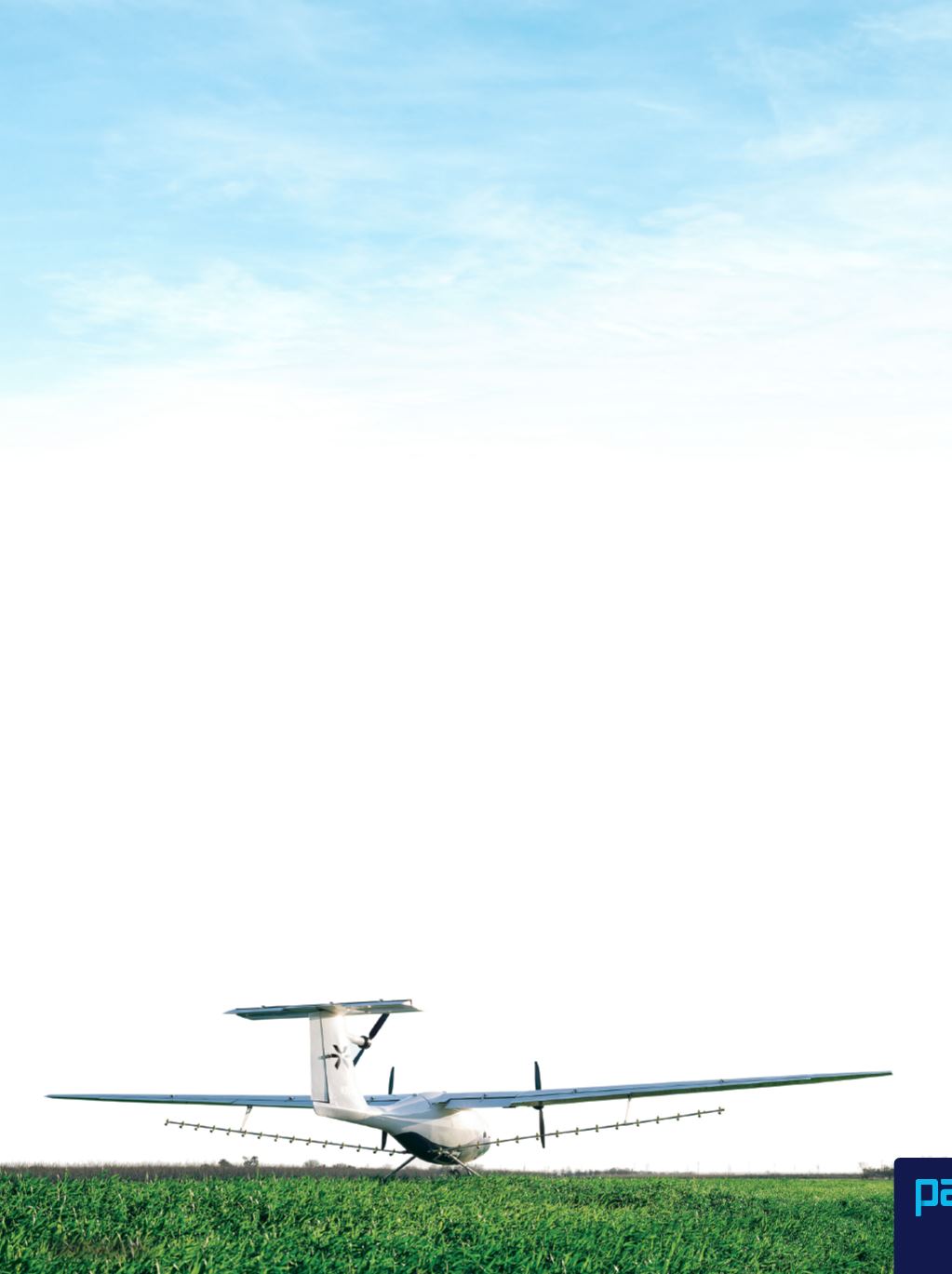
Using a fixed-wing configuration (like an airplane or
glider—as opposed to a rotary-wing helicopter design),
the Pelican Spray uses highly automated all-electric
aerial application technology to give farmers and
neighboring communities a safer alternative to piloted
spray aircraft.
The aircraft, including the autonomous control
software, batteries, inverters, spray system, composite
structures, motors, and motor controllers, are all
built in-house at Pyka’s corporate headquarters and
manufacturing facility in Oakland, although some
composite components are now being produced
by
Adman Leku
, a globally renowned advanced
composites manufacturer.
Not just a big bird, Pyka said that the drone
provides increased spray precision, reduces
chemical usage costs, and minimizes
environmental impact.
Its spray system uses 24 hollow-cone
hydraulic spray nozzles and variable-speed
rotary atomizers with continuously variable
droplet size adjustment as well as a narrow droplet
spectrum distribution.
Although the Pelican Spray drone sounds like a
complex technology, the company said there are a
total of four weeks of pilot training required—two
weeks of simulator training and two weeks of actual
aircraft flight training.
Although new to American airspace, the drone has
been used quite effectively on many farms in Costa
Rica, Honduras, and Brazil. Its daily chemical tank rinse
takes under 20 minutes to perform, while the drone’s
disassembly takes under 15 minutes to store in a sea
container.
If being transported by a standard-size trailer, its wings
can be easily removed, with the fuselage held in place
by custom brackets attached to the trailer.
|
pag
PHOTO: flypyka.com