



 9 / 32

09
were not always available at that time. As a result,
early enthusiasm was followed by some years of much
slower growth.
To keep the technology and further development alive,
Greentronics offered a simplified version without GPS
connectivity that worked very well as a conveyor, or
in-line scale. It quickly became popular with users who
wanted a better handle on filling loads, field totals and
tracking inventory.
“In 2005, some potato growers from Manitoba asked
Greentronics to develop an automatic boom height
controller for their harvesters. That’s when we
finally got back to working with sonar sensors,” said
Menkveld. “The purpose of this device was to give
operators an automated tool for maintaining proper
drop height from the harvester boom into trucks and
trailers. This accomplished two goals: first to reduce
the potential for bruising; and second, to take away
some of the operator’s workload.”
Menkveld said that by this time the technology for
sonar sensors had advanced a great deal. There were
many more options with much more attractive pricing.
Prototype development and field testing continued
through 2006 with what he deemed “good success.”
Although sales to potato growers were initially slow,
Menkveld said that with this development work now
complete, “Greentronics was able to turn its attention
back to finish the last stages in development of its auto
sprayer boom height control technology.”
Thanks to good field performance of prototypes during
2007-08, Greentronics was able to launch its 2-sensor
RH200
RiteHeight product in 2009. The
RH300
version
soon followed in 2010 and allowed up to five sensors
per system.
During 2014 and 2015, Greentronics worked hard to
develop its own ISOBUS client implementation. This
was first tested with the
RH400
systems, and became
a standard option with the introduction of the
RH430
system in 2016, said Menkveld.
In 2016, new sonar sensors were implemented by
Greentronics featuring longer range capacity and
better durability. “These sensors could be mounted
in much smaller housings,” said Menkveld. “More
importantly, the new sensors allowed for more
advanced software programming. It became possible
for operators to select from three modes: Bare Ground,
Full Canopy, and Partial Canopy. These were all major
improvements from the end-users’ point of view.”
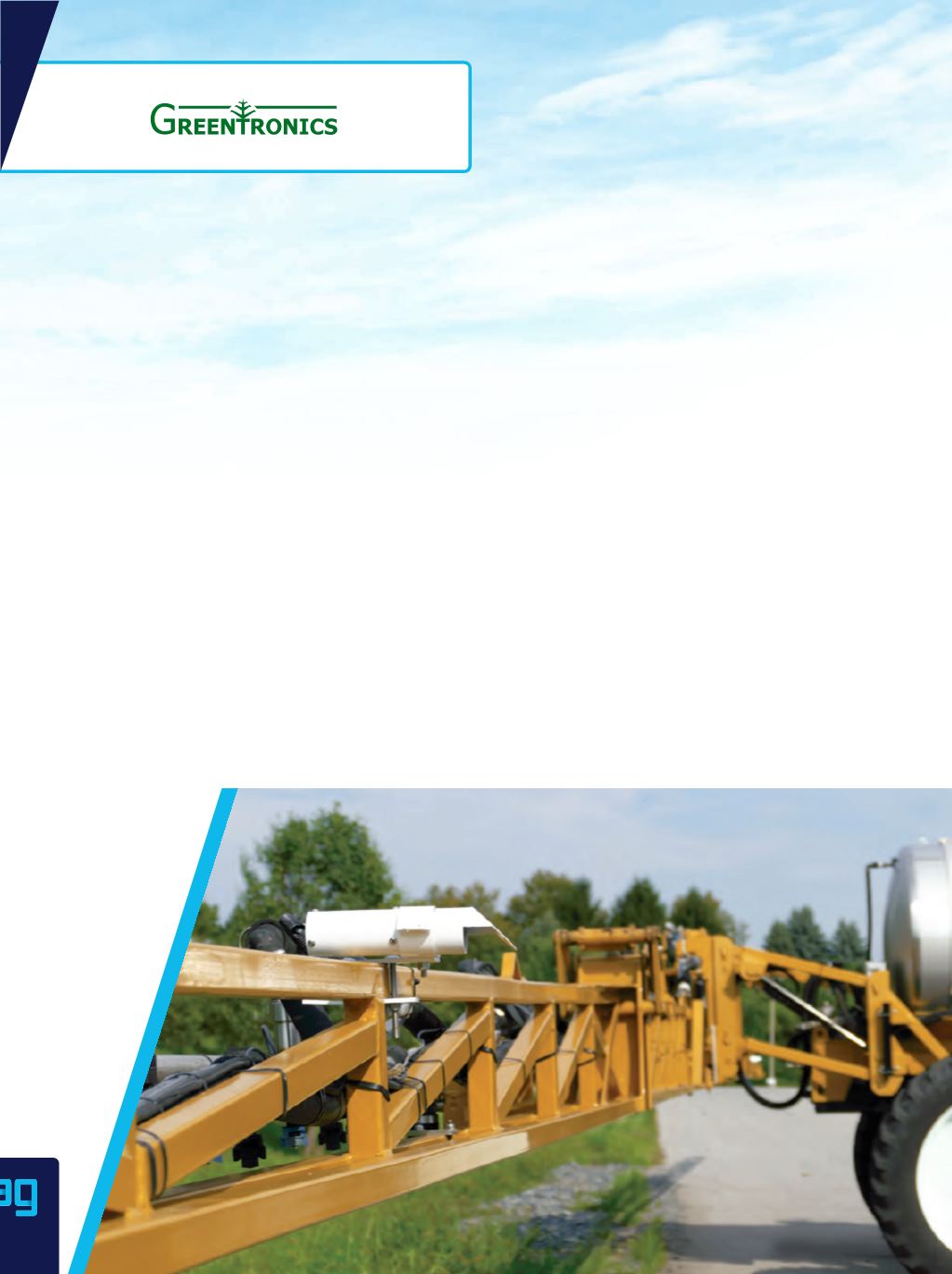
PHOTO: greentronics.com