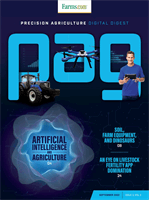



 16 / 28


16
While our ancestors used to farm with hand-held tools
and draft animals, present-day farmers with the means
use massive machinery, automated irrigation systems,
and advanced plant breeding techniques to cultivate
crops on a scale unimaginable just a few generations
ago except in far-seeing science fiction.
Because of our growing population, today’s farmers
are under more pressure to meet skyrocketing food
demand while facing factors that threaten harvests:
unpredictable weather patterns, unknown diseases
and pests, volatile markets, and consumer trends.
Fortunately, new technologies like AI, big data, and
the internet of things (IoT) can help farmers deal with
these challenges by automating tasks and standing
practices that reduce waste and enhance efficiency
at every stage of production—from sowing seeds to
harvesting crops.
Understanding AI: How it Works
AI is the art of making machines think like humans.
It refers to the ability of computers or machines to
mimic human capabilities such as learning, reasoning,
and self-correction. In practice, the term “artificial
intelligence” can be applied to a combination of
activities, such as strategizing a game plan or playing
chess.
AI encompasses various tasks, from computer vision to
robotics, translation, and predictive analytics to transfer
learning
( https://blog.superannotate.com/speed- up-labeling-process-using-transfer-learning/ ).
Artificial intelligence has the potential to transform
industries and solve some of the world’s most difficult
problems, including agricultural activities.
Use of AI in Agriculture
AI is one of the most promising fields in agriculture,
having the potential to revolutionize the industry.
Used in many different ways, including yield growth
and soil mapping, the demand for AI is increasing as
farmers are constantly looking for innovative solutions
that help them overcome challenges posed by
weather, pests, and plant diseases.
Via the use of advanced technologies such as machine
learning, computer vision, object detection, robotics,
and IoT sensor-based surveillance systems, AI offers
tremendous potential for improving the farming
experience.
For example, by using an AI system to manage crop
irrigation and fertilization, a farmer could reduce costs
and waste while increasing yields. Farmers can keep
track of each step in crop cultivation, and improve
farm production by monitoring various factors such
as soil quality, water management, and other weather
conditions.
Traditional Farming Methods and Their
Challenges
Traditional farming methods are inefficient, ineffective,
and unsustainable.
Some of the challenges faced by farmers are:
•
Climate change is a big challenge for a farmer, as
changing weather patterns have affected the soil
quality and crop yields. Climate change is causing
droughts and floods that affect the production of
crops;
•
Lack of technical knowledge leads to poor
farming practices. It is important to provide
nutrients in the soil with a specified ratio, as the
deficiency of nutrients can lead to poor quality of
crops;
•
Not having access to information and technology,
small-scale farmers often lack access to capital
(money). As such, they may lack the funds
necessary to handle the impact of natural
disasters, such as drought or flood, on their farms;
PHOTO: VAKSMANV – stock.adobe.com