InterSeeder allows farmers to do just that
By Diego Flammini
Assistant Editor, North American Content
Farms.com
Have you ever thought about planting cover crops like winter wheat, rye and alfalfa only weeks after planting corn and soybean?
If so, there’s now a tool that allows farmers to do just that.
The InterSeeder, an attachment developed by researchers including Corey Dillon at Penn State University’s College of Agricultural Sciences, travels between the row crops and can give farmers a head start on planting their cover crops.
Dillon estimates that with the InterSeeder, farmers can plant cover crops about six weeks after corn or soybean planting.
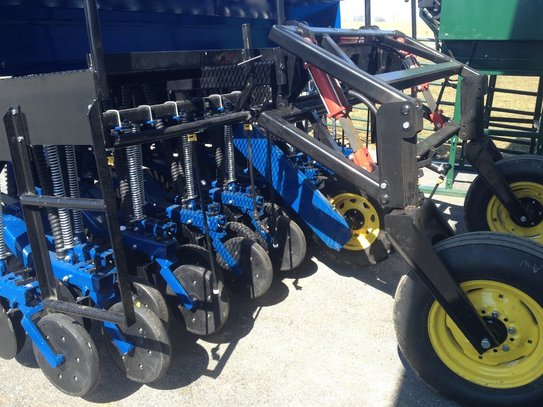
“The reason we plant the cover crop early in the season is to ensure that it is well-established by fall so that it can provide the multiple benefits to the farmland and help improve water quality,” he said in an article for the Centre Daily Times in State College, Pennsylvania. If we can have well-established cover crops going into the fall and winter we can dramatically reduce the amount of soil loss and nutrient loss into the ground water and streams.”
Dillon said planting cover crops early can also provide forage for livestock, reduce soil compaction and suppress weeds.
The idea for the InterSeeder came in 2010 when a study was being performed to evaluate the effects of removing corn stover (the leftover stalks and leaves from harvest) for cellulosic ethanol production.
Doing so removes nutrients from the soil and leaves it vulnerable to erosion. Paired with the fact that by harvest, weather can change and there aren’t enough hours in a day, Dillon had the idea to plant cover crops early.