Charity the cow is a donated piece of artwork
By Diego Flammini
Assistant Editor, North American Content
Farms.com
Residents of Markham, Ont.’s Cathedraltown neighbourhood are having a cow (pardon the pun) over a large bovine statue city staff recently erected at a nearby parkette.
The $1.2 million piece of artwork depicts Brookview Tony Charity, an award-winning Holstein that lived on Romandale Farm. The silver statue is roughly two-storeys high and the cow wears a wreath to commemorate its many victories.
And the parkette in which the cow stands is on Charity Crescent, which was named for the cow.
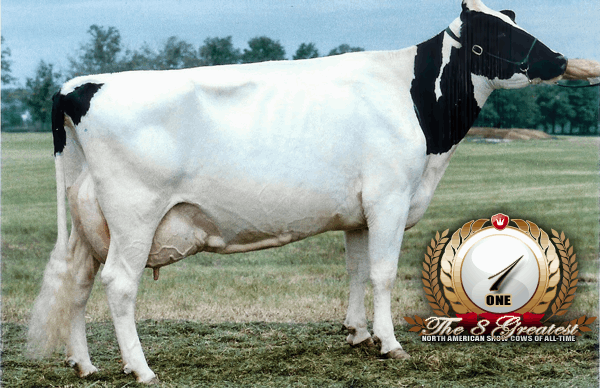
Brookview Tony Charity
Photo: The Bullvine
But some residents of the 19-home community want the statue removed.
“It’s extremely out of place,” Danny Da Silva, a Charity Cres. resident, told CTV News.
The statue could cause safety issues, impact property values and could be religiously offensive, he said.
In Christianity, “raising” a cow is symbolic with worshipping another god, according to The Book of Exodus.
The heirs of Stephen B. Roman, the cow’s owner, donated the statue. The Roman family founded Romandale Farm in King in 1950. The family moved their operation to Gormley in 1954 and to Markham in 1957.
The donors insisted on the residential location for the artwork, according to Alan Ho, the city councillor for the area.
“I was the person who seconded the motion to accept the art donation,” he told CTV. “But I also expressed concern that the location may be a problem.”
Councillor Ho seconded the motion in April 2016. The donor would be responsible for alternate installation if necessary, according to notes from the City of Markham.
Ho encouraged residents who oppose the statue to start a petition to City Council.
But some residents support keeping the cow in its location because it’s a reminder of how the community began.
“The land is land that was donated by Stephen Roman and Romandale Farms,” Ed Shiller told CTV. “And Charity really represents a significant part of the history of this community.
“In effect, it’s animals like Charity that enabled this community to be built.”
About Charity
Brookview Tony Charity was born on August 6, 1978 at a farm in Fremont, Ohio.
In 1981, Peter Heffering, owner of Hannover Hill Farm in Port Perry, bought her for $47,000.
In 1985, Stephen Roman purchased Charity from Mr. Heffering for $1,450,000, which at the time set a new record for the price of a cow.
Together, Romandale and Hannover Hill Farms developed a partnership to breed Holsteins.
Charity won numerous competitions, according to The Bullvine:
- All-Canadian winner from 1982 to 1985 and again in 1987,
- All-American winner from 1982 to 1985 and again in 1987,
- Grand Royal winner from 1983 to 1985 and again in 1987, and
- Grand Madison winner from 1983 to 1985 and again in 1987.
In a list of the eight greatest North American show cows of all time, The Bullvine ranked Charity as the best.
“She was incredible perfection!” said Andrew Hunt, founder of The Bullvine.