Nearby states experienced flooding due to the storms
By Diego Flammini
Assistant Editor, North American Content
Farms.com
A farm and family amusement park in Canton, Texas was heavily damaged by tornadoes that swept through the area on Saturday.
Yesterland Farm, a 32-acre agritourism farm, is sorting through rubble after the storms. The farm grows pumpkins and Christmas trees, and provides family fun with corn mazes and farm animals.
“We had grandstands that were 10 rows high and now they’re at the far end of our super slide, several hundred feet away,” Kama Bozeman, co-owner of Yesterland, told KLTV.
A total of four tornadoes touched down in Texas on April 29.
Two were rated an EF-0 (wind speeds between 65 and 85 mph) by the National Weather Service. Another two were rated an EF-3 (wind speeds between 136 and 165 mph).
KLTV.com - Tyler, Longview, Jacksonville |ETX News
Three of the four tornadoes traveled through Canton. And Bozeman knows the damage could’ve been much worse.
“So many (people) had total devastation,” she told KLTV. “You know, this is just nothing compared to what those people are dealing with.”
Yesterland is still on schedule to open in late September, Bozeman told KLTV.
The storms in Texas caused flash flooding in Missouri, Mississippi and Arkansas, where farmers may have to replant corn due to the torrential rains.
“I’d say we could have 20 (to) 30 percent of our planted acreage that could need to be replanted if water stays on too long,” Matthew Davis, a Jackson County extension agent, said in a May 1 statement.
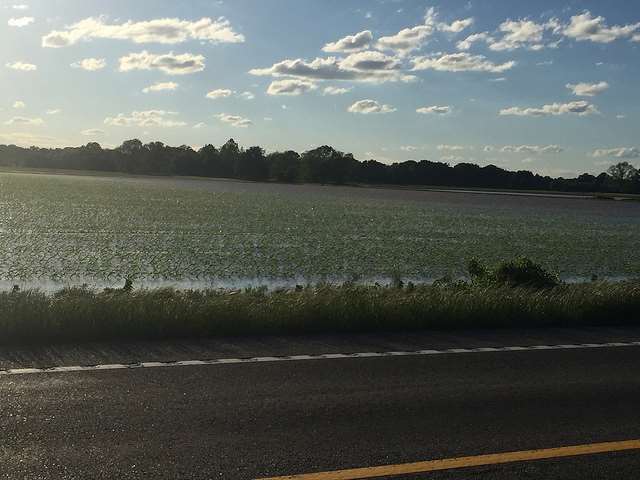
A flooded corn field in Arkansas.
Photo: University of Arkansas.
Most crops can handle up to 24 hours of standing water, Keith Perkins, Lonoke County extension staff chair for the Division of Agriculture, said in the statement. So, farmers don’t have to replant right away.
“(Farmers) shouldn’t be in a hurry to make any rash decisions. We are still early enough to replant and not suffer any yield loss on replants,” he said in a statement.
“All we can do is evaluate the stands once the water recedes.”.