Farms.com Home   News

Feedyard Manager Insists Good Health And Quality Genetics Go Hand In Hand

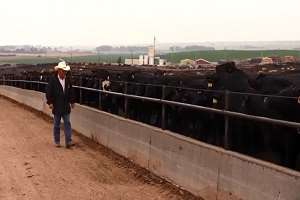
When it comes to calf health at Chappell Feedlot in southwestern Nebraska, manager Tom Williams gets down to details with customers. Each load is unique, based on their history.

“If we have some health issues, depending on what they are we’ll go back to the ranch for instance, a lot of ranches will have some mineral deficiencies, mineral issues, which may be a problem for adequate development of the immune system,” Williams said. “So in several cases we’ve had people go back and soil test and change their minerals.”

That one-on-one counseling shows in the finished cattle leaving the feedyard and their beef in the grading coolers, but the good health must start on the ranch. Williams advises that calves should be vaccinated twice if possible. He suggests vaccinating once while still nursing and again a couple weeks before moving them to the feedyard. He recommends that cattle be returned to their pens immediately after any doctoring to reduce the chance of reestablishing viruses.
 

Click here to see more...

Trending Video

What Really Drives Meat Quality in Pork? - Dr. Yan Huang

Video: What Really Drives Meat Quality in Pork? - Dr. Yan Huang


In this episode of The Swine it Podcast Show Canada, Dr. Yan Huang from University of Arkansas explores how genetics, nutrition, and stress management shape pork quality. He explains how molecular pathways influence fat deposition, muscle growth, and meat flavor while balancing production efficiency. Listen now on all major platforms!

"The most important driver of pork quality. Feed plays a very important role in the meat quality."

Meet the guest: Dr. Yan Huang / yan-huang-77829421 is an Associate Professor in Nutritional Skeletal Muscle Biology at the University of Arkansas. With academic experience across China, South Korea, and the United States, his work focuses on the genetic and molecular regulation of muscle growth and fat deposition in swine. His research connects genetics, nutrition, and pork quality to improve production efficiency and consumer satisfaction.