Farms.com Home   News

Drones May Improve Agricultural Practices, Increase Efficiency

The use of drones has evolved from a hobby to military use and now to agriculture. Farmers are using drones to inspect their crops, detect diseases and deliver chemicals.
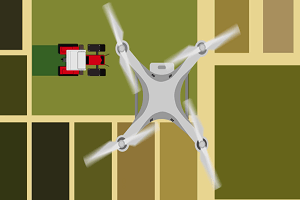


This technology is expected to increase crop yields and save growers time and money. The Association for Unmanned Vehicle Systems International predicts that 80 percent of drones in the commercial sector will be used for agriculture, according to USA Today.

Drones are a part of a practice known as “precision agriculture,” using big data to improve agricultural practices and efficiency. This technology is used alongside unmanned tractors and satellite technology to manage crops on a field-by-field basis. The use of drones already has increased yield confidence and reduced crop damage.

Drones are still in their infancy in terms of working with big-data agriculture. They are expected to collect more diverse and higher levels of data in the future, including tracking individual crops and inch-by-inch resolution of soil health.

Click here to see more...

Trending Video

Dr. Emerson Nafziger: Nitrogen Fertilizer Rates for Corn

Video: Dr. Emerson Nafziger: Nitrogen Fertilizer Rates for Corn

The Crop Science Podcast Show, Dr. Emerson Nafziger from the University of Illinois breaks down decades of nitrogen research. From the evolution of N rate guidelines to how soil health and hybrid genetics influence nitrogen use efficiency, this conversation unpacks the science behind smarter fertilization. Improving how we set nitrogen fertilizer rates for rainfed corn is a key focus. Discover why the MRTN model matters more than ever, and how shifting mindsets and better data can boost yields and environmental outcomes. Tune in now on all major platforms!

"The nitrogen that comes from soil mineralization is the first nitrogen the plant sees, and its role is underestimated."

Meet the guest:

Dr. Emerson Nafziger is Professor Emeritus of Crop Sciences at the University of Illinois at Urbana-Champaign, with degrees in agronomy from Ohio State, Purdue, and Illinois. His research has focused on nitrogen rate strategies and crop productivity. He co-developed the Maximum Return to Nitrogen (MRTN) model, which is widely used across the Midwest. His research spans N response trials, hybrid interactions, crop rotation effects, and yield stability.