Crop stage from crop to crop is highly variable, and is one of many reasons why neighbouring crops can’t be treated the same.
Canola crops side by side can have different risk factors, and often do not require the same crop management for nutrients, weeds, insects and disease. Crop rotation, fertilizer rates, plant population and stand uniformity are a few factors that can influence whether one crop needs a treatment while the other right beside may not.
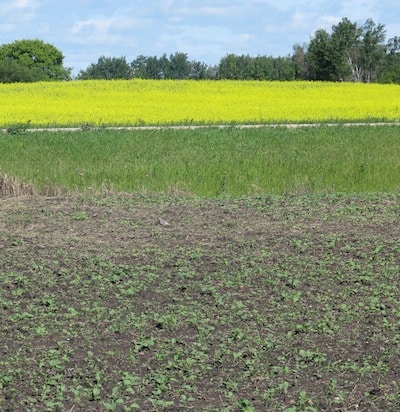
Crop stage is another important factor. Cabbage seedpod weevil, for example, is attracted to the earliest flowering fields in an area. Therefore these early fields may be at control thresholds while later fields never have enough weevils to warrant a spray.
The key is to manage each crop according to its own needs. Decisions made for one field based on what is required (or not required) in the field next door may not be in the best interest of profitability — especially this year.
Source: Alberta Canola Producers Commission