Farms.com Home   News

Temperature Impacts Corn Emergence

By Pam Knox

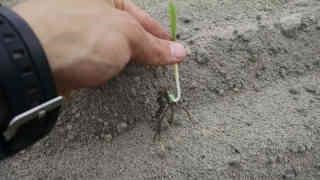
If you plant corn or work with farmers who do, you are probably well aware of the importance of watching soil temperatures before you plant. But if not, you might be interested in these Indiana PrairieFarmer stories that describe how soil temperature and moisture can affect corn germination and emergence. Farmers need to be aware of not only current soil temperature but also the forecasts for both the daily temperature range and potential rainfall. The soil temperature range is also affected by both the soil type and whether it is no-till or has a lot of debris on the surface. If the temperatures get too low, the seed takes a long time to germinate and emerge from the ground, causing spotty field coverage.

Temperature impacts corn emergence

Refresher on corn germination vs. cold soil temps
crop

Source : uga.edu

Trending Video

Root Exudates, Soil Biology, and How Plants Recruit Microbes | Field Talk Friday

Video: Root Exudates, Soil Biology, and How Plants Recruit Microbes | Field Talk Friday


Field Talk Friday | Dr. John Murphy | Root Exudates, Soil Biology, and How Plants Recruit Microbes

Most of us spend our time managing what we can see above ground—plant height, leaf color, stand counts, and yield potential. But the deeper you dig into agronomy, the more you realize that some of the most important processes driving crop performance are happening just millimeters below the surface.

In this episode of Field Talk Friday, Dr. John Murphy continues the soil biology series by diving into one of the most fascinating topics in modern agronomy: root exudates and the role they play in shaping the microbial world around plant roots.

Roots are not passive structures simply pulling nutrients out of the soil. They are active participants in the underground ecosystem. Plants constantly release compounds into the soil—sugars, amino acids, organic acids, and other molecules—that act as both energy sources and signals for soil microbes.