Farms.com Home   Farm Equipment News

The Mobile Office Combine From Case IH.

ZImmcomm Podcast from Farm Progress Show 2012.

Case IH equipment provided a few media opportunities at the Farm Progress Show. This combine doing a field demo is just one of them. Nathan Weinkauf, Global Marketing Manager, gave me a run down of what’s new.
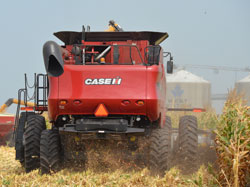


Nathan says their new Axial-Flow Combines for 2013 have completely redesigned cabs that are common across all models. He says it’s a true mobile office. It even has its own portable refrigerator. You’ll hear him describe a number of other features that set these combines apart from others. In addition to the new combines Nathan says that in 2013 Steiger Quadtrac will be available in the Steiger Rowtrac machines.

Listen to my interview with Nathan here: Interview with Nathan Weinkauf

2012 Farm Progress Show Photo Album


Trending Video

Dicamba Returns for Georgia Farmers: What the New EPA Ruling Means for Cotton Growers

Video: Dicamba Returns for Georgia Farmers: What the New EPA Ruling Means for Cotton Growers

After being unavailable in 2024 due to registration issues, dicamba products are returning for Georgia farmers this growing season — but under strict new conditions.

In this report from Tifton, Extension Weed Specialist Stanley Culpepper explains the updated EPA ruling, including new application limits, mandatory training requirements, and the need for a restricted use pesticide license. Among the key changes: a cap of two ½-pound applications per year and the required use of an approved volatility reduction agent with every application.

For Georgia cotton producers, the ruling is significant. According to Taylor Sills with the Georgia Cotton Commission, the vast majority of cotton planted in the state carries the dicamba-tolerant trait — meaning farmers had been paying for technology they couldn’t use.

While environmental groups have expressed concerns over spray drift, Georgia growers have reduced off-target pesticide movement by more than 91% over the past decade. Still, this two-year registration period will come with increased scrutiny, making stewardship and compliance more important than ever.