By Susan V. Fisk
The concrete jungle is anything but natural. But there are ways to help it be a little greener. The Soil Science Society of America (SSSA) May 1 Soils Matter blog explains what green roofs are, and how they benefit urban life.
Besides looking nice and providing an outdoor space, green roofs can save energy and help capture and clean water.
Green roofs are vegetated rooftops. The technology is still under development in the U.S. “Research and innovation continues to expand the possibilities and benefits of urban greening with green roofs,” according to blog author Mary Lusk, University of Florida.
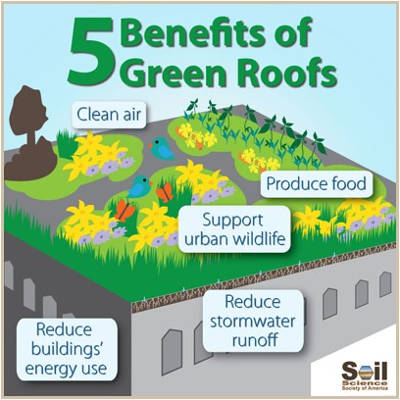
Why consider a green roof?
- Green roofs catch stormwater that would otherwise flow off roofs into rain gutters. This reduces urban flooding.
- The plants in green roofs capture carbon and clean the air.
- Green rooftops reduce energy use and help manage urban heat islands.
- They can provide islands of habitat for urban wildlife.
- They can produce food in places where the land no longer supports farming.
- Green roof designs range from lighter-weight, low-maintenance options to the more complex. This can even include urban recreation and farming options.
“An intensive green roof is designed to look much like a city park,” Lusk says. “Green roofs used for rooftop farming are one example of an intensive system. Intensive green roofs require a roof with high load bearing capacity, as they may weigh 35 to 80+ pounds per square foot.”
Click here to see more...