The emergency registration is in place until July 2024
By Diego Flammini
Staff Writer
Farms.com
Manitoba is granting sunflower growers permission to use aninsecticide on an emergency basis to help control pests.
On July 27, the provincial government, the Manitoba Crop Alliance and FMC Canada announced farmers in the province can use FMC’s Carbine insecticide to help manage lygus bugs in confection sunflowers.
Confection sunflower growers needed a new tool to help control these pests after lambda-cyhalothrin had its use re-evaluated in Canada.
The Manitoba Crop Alliance has been working on getting this emergency permission since April.
Lygus bugs can damage up to 35 seeds per head per adult lygus bug.
The feeding causes kernel brown spot, which appears like a physical scar on the bare seed. This contributes to a bitter taste when consumed.
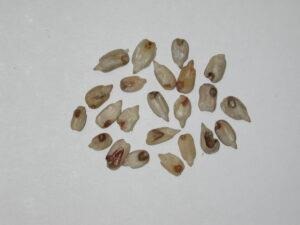
Kernel Brown Spot (Manitoba Crop Alliance photo).
The product “works by affecting the potassium channels in the pests’ nervous systems, permanently and irreversibly putting a stop to feeding within 30 minutes of application,” the insecticide’s overview says. “It provides residual control and helps protect both sides of the leaf from yield-robbing pests due to its translaminar activity.”
Translaminar means the insecticide penetrates the leaf tissues and forms a reservoir of the active ingredient within the leaf.
Farmers may only use Carbine for a limited time.
Confection sunflower growers can use the pesticide until July 20, 2024. The emergency use covers air and ground applications. Oilseed sunflower producers are not included in the emergency use.
Growers intending to sell their products in the U.S. or Canada are encouraged to discuss the use of Carbine with their end purchaser prior to application.
Farmers interested in using Carbine are also asked to contact their local FMC account manager.