By Michael Anderson
The 2021/22 U.S. hard red winter (HRW) wheat crop is developing under a range of conditions. However, rain makes grain, so anxious farmers are looking for clouds on the horizon.
Based on the
USDA’s Crop Progress reports, issued each week on Mondays, the HRW crop seems to be starting on average footing compared to condition reports at the same time last year. Yet USDA this week reported a 2% drop in the amount of winter wheat rated good and a 3% drop in the amount rated fair, while wheat rated as very poor grew by 16%. Overall, the USDA puts 53% of the U.S. HRW wheat crop between good and excellent conditions, a 2% drop from the week before.
Michael Peters, an Oklahoma HRW producer and U.S. Wheat Associates (USW) Secretary-Treasurer, noted that he had not received more than a half-inch of rain in the last 45 days.
Warm to Cold
Above-average temperatures in March only added to anxiety, especially as the crop enters its reproductive stage. And in typical spring fashion, unseasonably warm weather last week turned cold this week, with much of the Plains and Midwest experiencing
below-average temperatures.
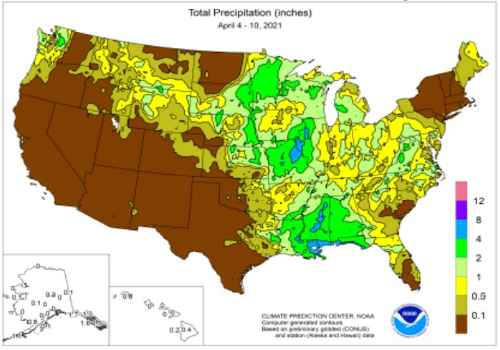
Some precipitation in the eastern Plains was some help for the 2021/22 HRW wheat crop from April 4 to 10 but dry conditions remain a concern. SRW conditions in the East look much better. Source: National Oceanic and Atmospheric Administration.
Following are brief summaries of growing conditions in six major U.S. HRW-producing states based on USDA’s April 12 report.
Colorado
The entire state of Colorado is experiencing some form of drought and windy weather has made conditions worse. Cold soil temperatures are keeping winter wheat progress back slightly. Recent snow helped with some moisture deficits with more snow in the forecast over the next week. USDA rates winter wheat conditions at 26% good or excellent.
Kansas
The winter wheat conditions in Kansas are above average. Wheat planted in September had significant soil moisture leading to a good looking and considerably different crop then wheat planted in October challenged by dry weather since seeding, creating two unequal crops. Much needed rain fell in March and more rain is predicted. Kansas wheat is rated 55% good or excellent.
Click here to see more...