By Victoria Witke
Jacob Faist is a crop farmer in Pleasant Lake northeast of Jackson. He grows corn, soybeans and wheat with his father and uncle.
Tar spot – an emerging fungal disease that damages corn leaves – terrified farmers when it first came into fields a few years ago, said Faist, a member of the Michigan Corn Growers Association board of directors representing St. Joseph, Calhoun, Branch, Jackson and Hillsdale counties.
“That first year we had it very bad. Some fields lost as much as $200 in income per acre,” Faist said.
He said the industry has learned to manage tar spot.
“Still, it’s definitely one of the main things we think about when we’re planning for the upcoming crop and then in season, while we’re managing the crop,” Faist said. “Tar spot is always on our mind.”
Tar spot in silage corn – used to feed dairy cattle – causes significant yield loss, hurts nutritional value and lowers milk production, according to a new study.
Michigan and the Great Lakes region are particularly vulnerable, and it’s found in every corn-growing county in the state.
“It’s literally black spots on leaves, which look like tar,” Harkirat Kaur said. “It’s like if you have a paintbrush and you dipped it in tar and then smashed it over a wall. Those spots you’d get on the wall is how it looks on the corn leaf.”
Kaur was a researcher in the study published in the journal Crop, Forage & Turfgrass Management. She is an assistant professor at the University of Wisconsin-Madison.
The study took place in Branch, Ottawa, Ingham and Barry counties.
Those black spots limit photosynthesis. That means the crop makes fewer kernels.
It also dries out the plants, leading to early maturity – and death, she said.
“It looks so dry that it doesn’t make sense for a grower to wait until the physiological maturity to be achieved because that would increase yield loss with each passing day,” Kaur said.
The disease also weakens the corn stalks. That causes the crop to fall over, so it can’t be picked by machines and harvested.
In 2024, about 320,000 acres of farmland in the state grew corn for animal feed, U.S. Department of Agriculture data shows. Lenawee and Sanilac counties produce the most corn. Ionia County is also among the top 10.
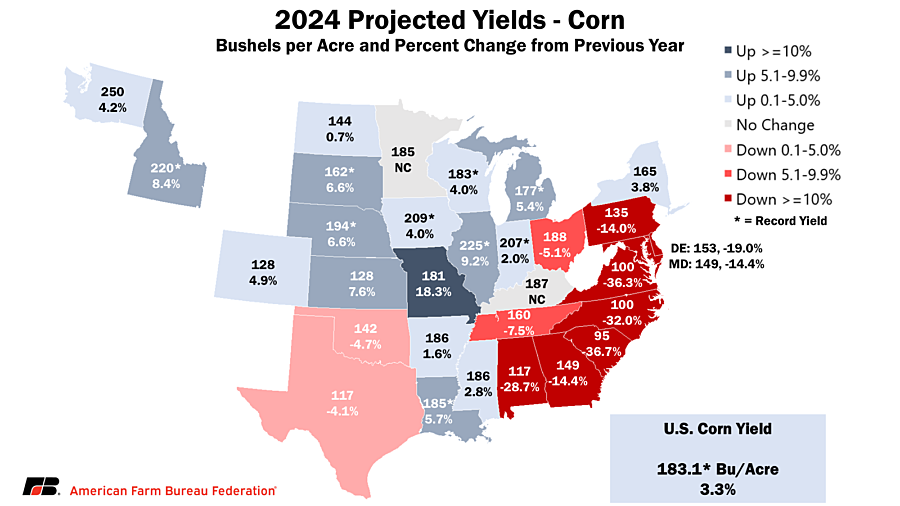
Kaur said 2020 and 2021 were “big years for tar spot.”
That’s because conditions were wet and humid, which allows the fungus to thrive, said Kristin Poley, the director of research and agronomy for the Corn Marketing Program of Michigan.
“When conditions are favorable for the development of tar spot, we can expect to see anywhere from 50 bushels per acre reduction in corn yield,” she said. “That’s a significant loss for our farmers.”
In this upcoming season, April is predicted to be wet, while drought conditions are expected for the rest of summer, Poley said.
“If that’s true, we shouldn’t expect tar spot to be prevalent,” she said. “However, with that being said, we can’t predict our extreme weather events.”
Tar spot spends the winter as spores in fields and floats in the wind all summer waiting for the right conditions to produce, Poley said.
Climate change makes it harder to forecast those conditions and where humidity will be, she said.
That lack of predictability is expensive.
Spraying fungicide is the biggest tool to fight tar spot. It’s preventative but doesn’t kill the fungus if there’s already an outbreak, Poley said.
Farmers have to apply it twice each season – first during the “tassel” or reproductive stage and then in either the second or third stage, when leaves and root systems form.
That second pass is critical but costly, Poley said.
Additionally, the application and labor cost can be pricey, she said. Some farms spray fungicide with drones, which saves time but costs more than other methods.
Fungicide costs about $20 per acre and $10 to $14 per application, Faist, the Lake Pleasant farmer, said.
Faist said there are predictive models to hopefully make tar spot surges not a surprise.
“But needless to say, we spend every day in the fields, looking, trying to find it, talking to either trusted advisors, agronomists or our fellow farmers,” Faist said.
Some farmers also plant tar spot-resistant seeds. The seeds aren’t completely immune but are less susceptible to the disease, Poley said.
“It takes a long time to create a hybrid that is resistant,” Poley said. “The industry’s working on it.”
Aside from reducing yield, tar spot decreases the nutritional value of corn for dairy cattle feed, the study said. That could lead to less milk being produced.
Kaur, the researcher, said, “It increases the nondigestible fiber content and reduces the overall intake value of the crop for livestock.”
That means cows are underfed, which can lead to health problems from not eating enough nutrients.
Because dairy cows would therefore weigh less, they’d produce less milk.
Faist said, “We’re trying to track tar spot, where it is. It’s definitely on our minds, but more so about preventing the massive disaster that can happen if we’re not proactive.”
Source : msu.edu