Fifty years after the creation of National Agriculture Day, America’s farmers, ranchers and private forestland owners find themselves on the front lines of climate change. They are uniquely positioned to deliver solutions by implementing climate-smart production practices that conserve natural resources, build healthier soils, reduce greenhouse gas emissions, and sequester carbon.
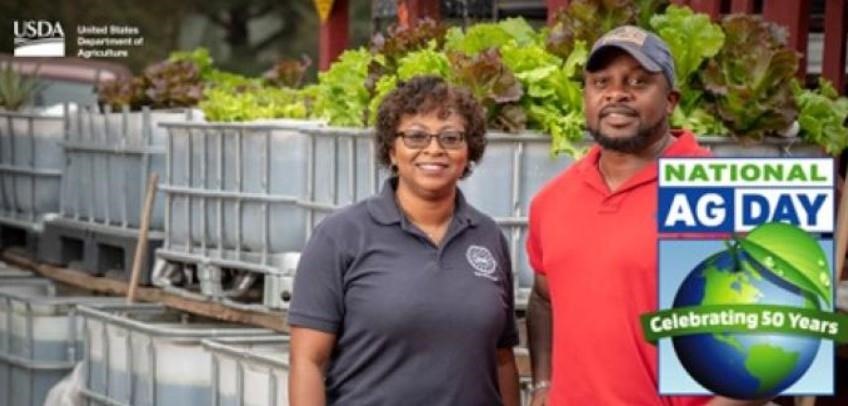
National Agriculture Day is a day to recognize the producers who are the best stewards of our land. America's producers are not only providing food, forage, and fiber for today - they are also investing in climate solutions that will ensure a prosperous agricultural future for generations to come. They are growing a climate for tomorrow, for our state, our nation and our world.
USDA is growing a climate for success for all people involved in farming, ranching and private forest land management. We are working to create an equitable and climate-smart food and agriculture economy built to support both rural and urban communities and empower California producers – who feed the world; improve the health, nutrition, and quality of life of all Americans; and yield healthy lands, forests, and clean water. From crop insurance to farm loans, and from conservation to disaster assistance, USDA programs are helping producers conserve natural resources and keep families farming for future generations.
At the national level, the Inflation Reduction Act (IRA) represents the single largest investment in climate and clean energy solutions in American history. This is a historic, once-in-a-generation investment and opportunity for this country and for the rural, suburban, and urban agricultural communities that USDA serves.
The IRA will help producers stay on the farm, prevent producers from becoming ineligible for future assistance. It provides $3.1 billion for USDA to provide relief for distressed borrowers with at risk agricultural operations, $2.2 billion in financial assistance for farmers who have experienced discrimination in USDA’s farm lending programs.
The IRA will also promote climate-smart agriculture by increasing access to conservation assistance. It directs approximately $20 billion to support USDA’s conservation programs that yield climate-related benefits while building resilience in agricultural operations.
USDA is committed to implementing the Inflation Reduction Act quickly and effectively to give farmers, ranchers, and private forestland owners the tools and resources they need to keep their operations productive and on climate change’s front lines.
But USDA can only succeed in its mission to help American agriculture thrive—and can only live up to President Lincoln's description of it as the "People's Department"—if it ensures that the Americans who need its services most receive them. Equity is not an add-on or extra; it is central to the Department’s mission.
Equity is a component in all we do at USDA. We ensure that the programs we support and the investments we make are available to everyone and we take special steps to ensure that underserved and small and medium-sized producers can participate in our programs and prosper as a result of our work.
USDA is working across its agencies to support urban producers in their efforts to not only grow fresh, healthy produce, but also help create jobs, beautify their neighborhoods, and increase access to fresh, healthy food in areas where grocery stores are scarce.
On National Agriculture Day and every day, USDA is committed to ensuring our programs and investments reach all producers, including underserved producers who haven’t always had the opportunity to benefit from the many resources USDA has to offer. We are committed to ensuring producers have the tools and resources they need to be part of the climate solution. Please join us in thanking our nation’s producers and wishing them a happy National Agriculture Day!
Source : usda.gov