Familiar for its sugary taste, long shape, and bright orange flesh, the sweetpotato is a Thanksgiving favorite plated in casseroles, pies, and sweetpotato fries.
The oldest known sweetpotatoes were found in the caves of Chilca Canyon, Peru. The root crop spread from South America to Oceania before western exploration. Routes from Mexico and the Caribbean brought it to Europe, and the sweetpotato now ranks seventh in food production worldwide.
The sweet tubers are typically grown in warmer southern states, but WSU scientists want to figure out if sweetpotatoes can be grown successfully in Washington.
“We’ve never tried it before, but we’re finding it’s productive,” said Carol Miles, director of WSU’s Northwestern Washington Research and Extension Center in Mount Vernon. “They grow bigger and faster with the longer daylight we have here in the Pacific Northwest.”
Using biodegradable plastic mulch to warm the soil, the WSU sweetpotato trials have had better yields than in the southern U.S.
Consumers would benefit by having access to a locally grown root vegetable packed with nutrients and antioxidants like vitamin A, vitamin B6, vitamin C, potassium, and fiber.
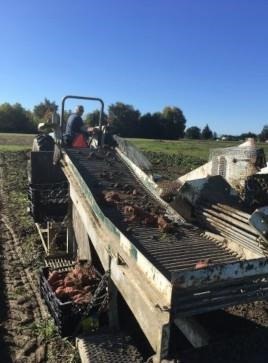
“Because sweetpotatoes are a high value crop, this could provide growers with more income compared to other conventional crops,” said Srijana Shrestha, a master’s student in Horticulture.
“The vines of sweetpotatoes are edible and could be used for dairy feed, just as pea vines were used in the region up to a decade ago,” added Miles.
Skagit County growers are always on the lookout for a new rotation crop beyond staples like spinach and potatoes, Miles said. Growing different crops in the same soil from year to year decreases the likelihood of having the same pests return.
The greatest threat to sweetpotato production is the wireworm, an insect pest that attacks the roots.
“We’re testing breeding lines and a newly released variety resistant to wireworms. This could reduce wireworm pressure for the next crop as well,” said Shrestha.
Though often called a “yam” in different regions of North America, the soft orange root vegetable is distinctly different from the botanical yam, and a distant cousin of the potato.
“This is the first year we’re testing breeding lines to see if some genetic lines do better in our area than others,” she said. Results from the study are expected this winter.
Source : wsu.edu