Homer generally saw agriculture as a symbol of nobility
With Christopher Nolan’s The Odyssey currently dominating the box office, Farms.com investigated Homer’s nearly 3,000-year-old story to find ways he used agriculture.
Generally, Homer saw agriculture as a symbol of nobility and civility.
One example of Homer’s positive portrayal of agriculture is his comparison of the Greeks versus creatures like the Cyclopes.
Whereas the Greeks plant and harvest, the Cyclopes put all their faith in the gods.
“They put trust in gods, and do not plant their food from seed, nor plow, and yet the barley, grain, and clustering wine-grapes all flourish there, increased by rain from Zeus,” Odysseus says in Book 9.
Another example comes later in the story.
In Book 18 of the tale, Odysseus, disguised as a beggar, challenges Eurymachus, a suitor of Penelope, Odysseus’s wife, to an agricultural contest.
“Let us each take a yoke of tawny oxen, well-mated and of great strength of endurance: turn me into a four acre field, and see whether you or I can drive the straighter furrow,” Odysseys says.
Eurymachus scoffs at the idea and doesn’t formally accept the challenge.
Homer also used agriculture to highlight a lack of self control in men.
When Odysseus and his men arrive on the island of Aeaea, they meet Circe, a sorceress who can transform people into animals.
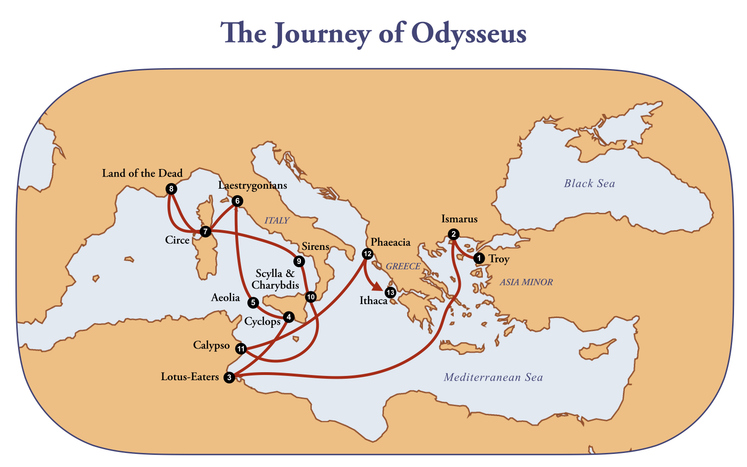
In Book 10 she feeds Odysseus’s shipmates a poisoned meal and turns them into pigs.
“And they had the heads, and voice, and bristles, and shape of swine, but their minds remained unchanged even as before,” Homer writes. “So they were penned there weeping, and before them Circe flung mast and acorns, and the fruit of the cornel tree, to eat, such things as wallowing swine are wont to feed upon.”
Homer’s version of the story indicates Circe did this because she has the power to. In Christopher Nolan’s movie adaptation, she transforms the crewmen to protect herself from potential unwanted advances.
Another example of using agriculture to highlight man’s lack of awareness relates to the Cattle of Helios.
In Book 12, Odysseus and his men arrive on the island of Thrinacia, where Helios, the sun god, keeps a herd of sheep and cows.
Circe and a blind prophet named Tiresias warn the sailors against eating the animals because doing so would upset the gods and result in death for Odysseus’s crew.
“But if thou harmest them, then I foretell ruin for thy ship and for thy comrades, and even if thou shalt thyself escape, late shalt thou come home and in evil case, after losing all thy comrades,” Circe tells Odysseus.
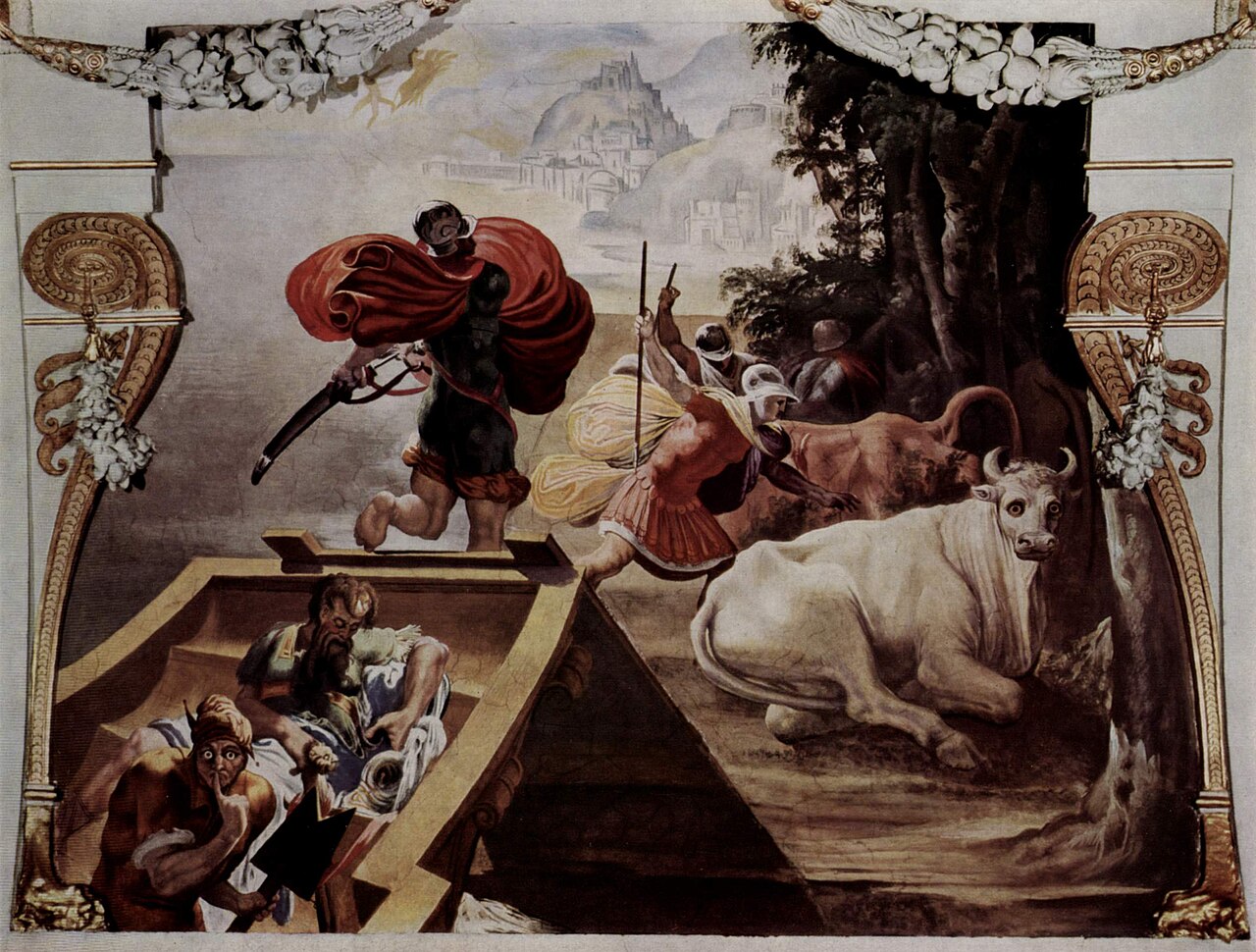
The Companions of Odysseus Steal the Cattle of Helios (Painting by Pellegrino Tibaldi)
But when a powerful storm traps the men on the island and hunger starts to set in, the sailors kill and eat cattle as Odysseus slept.
Circe’s premonition comes true, and Zeus destroys their ship with lightning leaving Odysseus as the only survivor.
“Therewith Zeus thundered and hurled his bolt upon the ship, and she quivered from stem to stern, smitten by the bolt of Zeus, and was filled with sulphurous smoke, and my comrades fell from out the ship,” Homer wrote.
A few characters in the story also have ties to ag.
King Laertes, Odysseus’s father, retreats to a small farm as he mourns his son’s departure for the Trojan War.
The two reunite in Book 24 when Odysseus visits his father on the farm. He proves his identify by listing the fruit trees he received from Laertes as a child.
Eumaeus, is a loyal servant who cares for Odysseus’s swine herd. And Philoetius tends to the livestock.
Anyone interested in reading The Odyssey can do so here.
And for those long days in the tractor, an audiobook is available on Spotify.