Farms.com Home   Ag Industry News

Ontario grain farmers have invested over $1bn into inputs

GFO made the announcement May 25

By Diego Flammini
Assistant Editor, North American Content
Farms.com

Grain farmers across Ontario have invested a combined $1.25 billion into inputs for this season’s crops.

According to OMAFRA’s 2016 Field Crop Budget pre-acre input costs and Stats Canada’s March 2016 principal field crop areas, Ontario grain farmers have invested in seeds, seed treatments, fertilizers and pesticides.
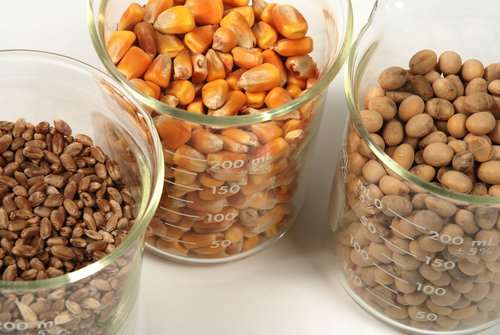
Corn, soy and wheat

Farmers are always investing heavily despite the fact they may not have a successful season.

“Every year farmers invest significant financial resources in their crops,” says Mark Brock, Chair of Grain Farmers of Ontario in a May 25 release. “At this time of year, our expenses are high and turning a profit at harvest is never a guarantee. It’s not uncommon for a farmer to spend several hundred thousand dollars just to get their crops started.”

Brock also noted that the inputs only cover a portion of the total costs a farmer has to navigate.

“There is a lot of risk, both environmental and financial, in grain farming,” says Brock. “Input costs are just one part of it – there are also labour costs, research and administration time, equipment maintenance and repairs, and a lot of personal energy spent on the land and crops.”


Trending Video

Evolution of Beef Cattle Farming

Video: Evolution of Beef Cattle Farming

The Clear Conversations podcast took to the road for a special episode recorded in Nashville during CattleCon, bringing listeners straight into the heart of the cattle industry. Host Tracy Sellers welcomed rancher Steve Wooten of Beatty Canyon Ranch in Colorado for a wide-ranging discussion that blended family history and sustainability, particularly as it relates to the future of beef production.

Sustainability emerged as a central theme of the conversation, a word that Wooten acknowledges can mean very different things depending on who you ask. For him, sustainability starts with the soil. Healthy soil produces healthy grass, which supports efficient cattle capable of producing year after year with minimal external inputs. It’s an approach that equally considers vegetation, animal efficiency, and long-term profitability.

That philosophy aligned naturally with Wooten’s involvement in the U.S. Roundtable for Sustainable Beef, where he served as a representative for the Colorado Cattlemen’s Association. The roundtable brings together the entire beef supply chain—from producers to retailers—along with universities, NGOs, and allied industries. Its goal is not regulation, Wooten emphasized, but collaboration, shared learning, and continuous improvement.