Farms.com Home   Ag Industry News

Register for dairy margin protection as of July 1st

Program helps farmers cope with fluctuating prices

By Diego Flammini, Farms.com

In an effort to offer farmers protection from ever-changing prices associated with producing dairy products, the United States Department of Agriculture will be accepting enrollments for the Margin Protection Program starting July 1st, 2015.

The program provides dairy producers with financial assistance when the margin (the difference in cost between prices of milk and feed costs) is below the level of coverage they’ve selected.
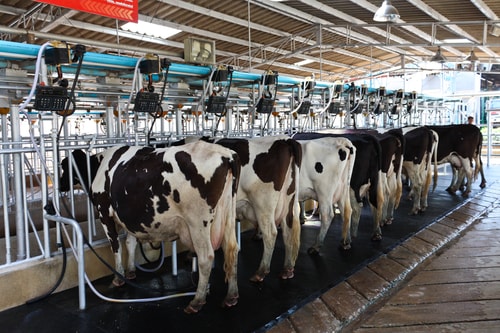
Cows being milked

More than half of America’s dairy farmers enrolled in the program last year and officials are optimistic about the trend continuing.

"We are confident that dairy farmers across the country will again take advantage of this safety net program for 2016,” said Agriculture Deputy Secretary Krysta Harden. “USDA will continue outreach efforts, including partnering with cooperative extension services, to ensure dairy producers are fully informed about the protections that this safety net program can provide during periods of market downturns."

Enrollment for the 2016 program opens on Wednesday, July 1st, 2015 and goes until Wednesday, September 30th, 2015.

Farmers will be covered until 2018 and only have to pay an annual administration fee of $100. They’ll also be able to change their coverage levels during the enrollment period. Payments are calculated based on the operation’s history of dairy production. If the operation took part in the program in 2015, its production is estimated to increase by 2.61%.

Producers who are currently participating in the Livestock Gross Margin insurance program can register for the Margin Protection Program, but it will only begin after their livestock dairy insurance coverage ends.

Dairy farmers wishing to enroll in the protection program must submit an application form, documenting their coverage levels. If for 2016 a higher level is being selected, producers can pay the premium in full, or at least 25% of it by Monday, February 1st, 2016.

To aid in the process, the USDA has also developed an online tool to help dairy farmers choose their level of coverage. It allows producers to calculate their needs based on price projections.

If you’re looking to expand your dairy operations, be sure to check out the Farms.com dairy cattle classifieds listings.


Trending Video

Will the 2025 USDA December Crop Report Be a Market Mover/Surprise?

Video: Will the 2025 USDA December Crop Report Be a Market Mover/Surprise?


Historically, the USDA December crop report is a non-event or another dud report as the USDA reserves any final supply changes to the final report in January of the following year in this case 2026. But after the longest U.S. government shutdown in history at 43 days and no October crop report will they provide more data/surprise and make an exception?
Our China U.S. soybean purchase tracker is now at 26.6% or a total of 3.2 mmt but for traders it’s taking too long to unfold.
The final Stats Canada production report was bearish canola and wheat projection a record crop in both (it adds to the global glut of supplies) and bullish local corn and soybean prices in Ontario/Quebec thanks to a drought. It will not help the fund flow short-term, the USDA may need to offset it?
A U.S. Fed interest rate cut of another 25-basis point next Wednesday (probability 87.1%) could help fund flow and sentiment in stock and ag commodities into year end.
More inflows into Bitcoin this past week saw prices rebound back above 90,000 with support at 82,000 and resistance at 96,000.
A V-shaped bottom in cattle suggest the lows are in after Mexico reported another new world screwworm case. Lower weights, seasonal demand and higher U.S. beef select/choice values with a continued closure of the Mexican border to cattle will result in a resumption of higher cattle futures into yearend.
Australia is expected to produce its 3rd largest wheat crop ever at 36 mmt adding to the global glut of supplies.
Reports of ASF in hogs in Spain the largest pork exporter in Europe could see the U.S. win more pork export business long-term.
If the rains verify into next week of 3-5 inches for Brazil it would go a long way to fixing the dry regions from the last 2-months, but the European weather model has been wrong for the past 2-months!
Natural gas futures are surging to the 3rd price count as frigid hold temps set in.
CDN $ is also surging to end the week on a very resilient economy and better employment numbers suggesting no interest rate cuts next week.
Finally, the CFTC report showed funds were net buyers of soybeans but sellers of corn, canola and wheat. In real time the funds have gone back to selling as they take some profits.