This 10hp beauty is easy to work on and makes for a great collector’s tractor
IN THE SHOP with Rachel
By Rachel Gingell
Farms.com
The Massey-Harris Pony was manufactured in Woodstock, Ont. from 1947 until 1957. About 28,000 of these tractors were built during the 10 year production run. The Pony was by far the most popular model of the Massey Harris equine line, which included the Pacer, Colt and Mustang. The Pony was the smallest of the bunch. This tractor was designed to compete with the John Deere L, the Allis Chalmers G and the Farmall Cub.
The Model 11 Pony was the most popular Pony tractor but Massey-Harris produced other variants as well. These variants included the industrial version (Model 14 Pony) and the Model 811 Pony, which was manufactured in France.
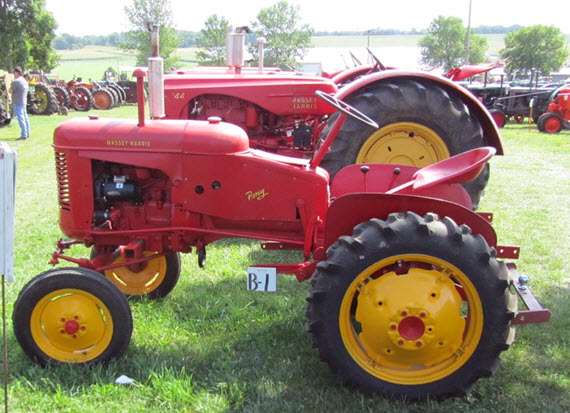
Massey-Harris Model 11 Pony
Photo: TractorData.com
This Pony is great for collectors and beginning mechanics for three reasons: parts availability, ease of work and small size.
While you won’t find new Massey-Harris tractors in production today, the company lives on through a series of mergers that resulted in today’s AGCO Corporation. Your local AGCO dealer can still order parts for these Massey-Harris tractors and plenty of aftermarket options are available.
Engine parts are particularly easy to source, since the tractor used a Continental 1.0L four-cylinder gasoline engine – the same engine used in the popular Allis Chalmers Model G. Tens of thousands of these engines are still in use today, which is great news for parts availability.
The Pony is also easy to work on. The Continental engine is very reliable, with a straightforward design. It’s a very approachable project for a beginning mechanic.
Finally, the tractor’s small size makes it easy to transport and work on. You don’t need a huge shop or a large truck to work on and haul this tractor – making it perfect for a small winter project and a fun for a tractor parade.