By Bruce Potter
Black cutworm (BCW) moths arrived in Minnesota right on schedule this spring. The first moth was captured April 6 in McLeod County. Cooperative Black Cutworm Trapping Network results from 2012 to 2023 show the earliest migration arrival detected was March 30, 2021, and the latest was April 13 in 2018.
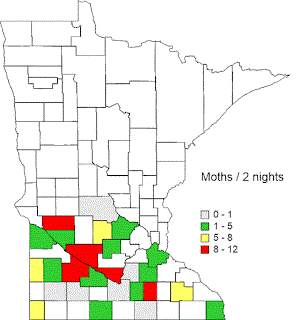
Numerous cooperators traps reported captures from April 6 through April 19. The number of moths captured in most traps has been low to moderate.
The first exception was a Brown County trap where an 8-moth capture occurred April 8. This is a significant capture. The network has been using 2 moths captured over a 2-night period as an indication that a large migration has occurred and an increased potential for crop damage. Other significant captures occurred April 14 in Steele Co, and July 16 -17th in Nicollet, Redwood, Renville, and Swift Counties.
Black cutworm larvae have a wide host range including corn, sugarbeets and soybeans. The female moth looks for sites with winter annuals and early spring emerging annual weeds to lay her eggs. Tillage disrupts this weed growth and makes a field less attractive for egg laying. For BCW management, it is helpful to record when early season vegetation is terminated by tillage or burndown herbicide.
The eggs laid by the April 8th moth flight are projected to hatch on April 23 and the larvae large enough to cut small corn plants on May 20. Larvae from later arriving moths will be hatching a few days later.
Source : umn.edu