By Mark Richardson
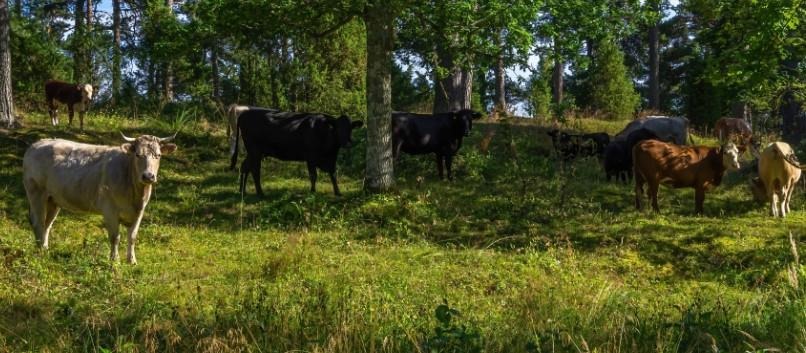
One of the benefits of silvopasturing is to relieve grazing animals, such as cattle, from the perils of heat stress.
Michigan farmers and others are growing crops, trees and livestock on the same land to help battle climate change.
The technique, known as silvopasture, helps collect the carbon responsible for global warming. Agriculture agents say silvopasture is the practice of integrating trees, forage and the grazing of domesticated animals in a mutually beneficial way.
Monica Jean, a crop educator with the Michigan State University Extension, said her office works with farmers around the state to optimize their systems through an environmental lens.
"We work with a little bit different stakeholders," she said, "but because we cover the three pillars of silvopasture - trees, forage and livestock - that's how we work with farmers on implementation, or site selection."
Jean said states with a large amount of forested land - such as Michigan, Kentucky, New York and Oregon - are prime places for silvopasture, as many grazing fields are in close proximity to woodlands.
While it's relatively new to American farms, silvopasture is actually one of the oldest land-use practices in human history, dating back centuries to Europe. Brett Chedzoy, regional forester for the Cornell University Cooperative Extension, said the process can work on small, wooded plots and large operations alike.
Click here to see more...