By Katie Miller
Regardless of ranch size or management methods, stockmanship serves as a cornerstone of ranching. For more intensively managed operations utilizing regenerative grazing methods, however, proper livestock handling and close observation are essential, and in turn drive and inform many herd-management decisions.
“Stockmanship becomes a priority, because your animals will tell you when they’re content, and they will tell you when something is insufficient — whether that be forage availability or nutrition,” says Caitlin Hebbert, livestock consultant for Noble Research Institute. Proper stockmanship also can pay off in reduced labor, improved animal comfort and performance and, ultimately, an improved bottom line.
Contented creatures are a good sign
Hebbert uses contentedness as a critical metric for evaluating grazing management on the Noble Ranches. The body language and habits of the animals serve as cues for observant ranchers.
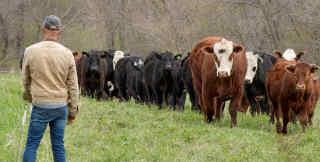
“You’ll notice whether the cattle are comfortable whenever you move pastures,” Hebbert says. “Understanding body language and cues, such as if they’re meeting you at the gate ready to move or bawling before you even get there, lets you know if the cattle have been on a pasture too long or are getting enough to eat.”
Simple habitual indicators also help ranch managers tell if their animals are content. Ruminants often go out and graze before bedding down midday to rest, digest and ruminate. Taking note of these “ruminating” periods (timing, frequency and duration) can tell a manager a lot about their animals’ grazing patterns.
On the other hand, Hebbert says, “If you notice that it is the absolute heat of the day and your animals are constantly grazing and never seem to get content, that probably means they can’t afford to rest from grazing because there isn’t enough forage quality or quantity, and they’re having to hustle to meet their needs.”
Avoid bawling congregations
One of the best indicators of animal contentedness is their reaction when it is time to move pastures. Cattle crowding or bawling at the gate when you arrive can mean they didn’t have adequate forage for that grazing period.
Likewise, carefully look for and note certain behaviors after the animals move into a new paddock.
“If cattle come through the gate and immediately begin to graze and block traffic at the gate, it can often mean they’re too hungry to explore deeper into the paddock,” Hebbert says. “You may not have had enough forage in the last paddock, or you left them there too long. You can use these behaviors as a metric to help you time your next move.”
Ideally, she says, satiated and calm animals will enter the new pasture or paddock and slowly make their way to the backside of the paddock. Cattle often do this as a way of exploring their new boundaries and scoping out new forage availability – maybe seeking preferential forage species or communities.
Click here to see more...