Animal genetics plays a crucial role in modern agriculture, enhancing food sustainability, and animal adaptation to a changing climate. Over the years, animal breeders have underlined the significance of genetics in enhancing animal productivity. Preserving diverse sources of animal germplasm is crucial to maintaining genetic diversity, which provides economic sustainability and food security in the face of new diseases and climate change, and advances our knowledge of animal genetics and genomics.
USDA's Agricultural Research Service's National Animal Germplasm Program (NAGP) has collected and preserved more than one million samples from over 64,000 animals across the United States. These samples, dating from the late 1940s to the present, aim to maintain the genetic diversity of American livestock, providing genetic security and improved understanding of genes that influence and control valuable animal characteristics.
"Over the last 24 years, NAGP has released almost 11,000 samples from the germplasm collection to breeders, university researchers, and others in the animal industry and scientific community for molecular studies and introduction of lost genetic variability in living populations," said Harvey Blackburn, NAGP animal geneticist and program coordinator. "The released genetic resources enable exploration into important livestock industry problems."
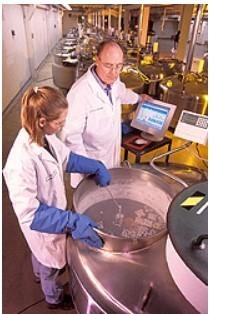
National Animal Germplasm Program coordinator Harvey Blackburn and technician Ginny Schmit place animal germplasm samples into a liquid nitrogen tank for long-term storage. (Photo by Stephen Ausmus).
Recently, the use of NAGP collections has brought to light interesting findings.
A beef cattle producer in South Dakota successfully incorporated samples from the NAGP repository into their breeding program. They requested and received semen samples from five Angus bulls born before 1997, which were used to mate with over 150 Angus cows. The resulting offspring are helping to modify the breeder's cow herd to meet their production and marketing objectives. Bull progeny from pre-1997 genetic resources have shown high performance levels for a combination of traits and are consistently highly sought after in the marketplace over the past few years. Researchers from NAGP and the Livestock and Range Research Laboratory are now studying the underlying genomic differences in progeny from these bulls older than 26 years old and the current population of Angus to better understand the basis for the higher performance levels.
This is not the first time NAGP animal geneticists and the industry have seen the positive impact of sampling older generations of sires in the collection. In 2020, Blackburn collaborated in a study completed by researchers from Pennsylvania State University's (PSU) Department of Animal Sciences. In that study, it was found that the entire U.S. Holstein population originated from two paternal lineage lines (only two different Y chromosome origins) traced to prominent 1970-era bulls. Through genomic and pedigree lineage tracing of samples in the germplasm collection, they found two additional, unique Y chromosomes that were lost in current Holstein lines due to selection. Calves were created using germplasm samples from these two bulls, and like the Angus example, the daughter progeny produced milk yields above the expected level and equal to their counterparts from the current Holstein genetic base born in the same year.
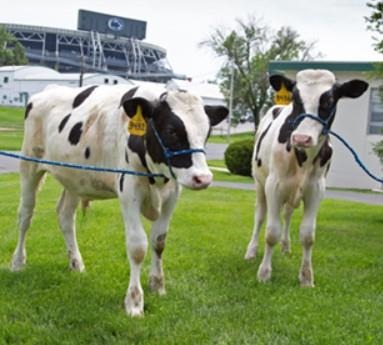
Holstein bull calves produced using NAGP germplasm samples in a collaborative work between USDA-ARS, Penn State, Select Sires, and TransOva. (Photo by Amy Duke, Penn State).
"These examples of how the animal germplasm collections are used in research and breeding programs are of great importance for the industry," says Blackburn. "Although large breeds of dairy and beef cattle, like Holstein and Angus, are believed to have no diversity issues, these examples have uncovered the opposite, especially with the lack of variation of the Y chromosome in Holstein bulls. Both the Angus and Holstein examples illustrate the value of the germplasm collection to broaden, and even rescue, genetic diversity, improve animal performance, and suggest to scientists that there is still significant research to be done in understanding the genetic basis for livestock performance."
Source : usda.gov