By Brittney Deming
The Willamette Valley is one of the vegetable seed capitals of the world, a very special place for growing high-value seeds, and an economic powerhouse for our state. Currently, cultivation of rapeseed/canola, a low-value oilseed that can irreversibly undermine the vegetable seed industry through cross-contamination and increased pest and disease pressure, is capped at 500 acres in the Willamette Valley Protected District. However, this cap is set to expire at the end of June and a few politically-connected farmers are pushing to grow more rapeseed/canola in the protected district. This session, the Oregon legislature can and should make the Protected District permanent and thus ensure that this vibrant part of our farm economy remains strong for generations to come through SB789.
Dozens of seed companies work with hundreds of farmers to produce high quality seed in the region. Because plants in the Brassica family can easily cross with each other (think brocolli, kale, cabbage, etc) a complex system of isolation distances, mapping, and coordinated management have been created to ensure that the seed you buy from Willamette Valley growers is true to type – ie red cabbage is red cabbage, savoy cabbage is savoy cabbage, purple top turnip is purple top turnip etc. Because canola (raised and crushed for oil) is also in the Brassica family but is not typically managed the same as high quality seed, there have been restrictions on canola in the Willamette Valley for years.
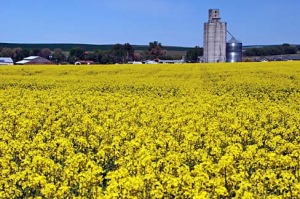
Canola’s bright flowers are pretty, but canola production endangers the Willamette Valley’s important and diverse vegetable seed crop production industry.
An important new study quantifying the major risk to seed farmers in the Willamette Valley was released February 16, 2023. The study measures the impact of dismantling the Willamette Valley Protected District on the valley’s vibrant specialty vegetable seed sector.
Click here to see more...