July and August were not kind to the cattle market, but September did bring some reason for optimism. Two weeks ago, I wrote about signs of price stability and last week Josh wrote about a relatively bullish September cattle on feed report. But this week I want to focus on the cull cow market, which is not showing any real signs of improvement. As I write this on September 28th, cull cow prices in Kentucky are down more than $30 per cwt from their summer highs. The same is largely true in the Southern Plains, although those highs were put in a bit earlier.
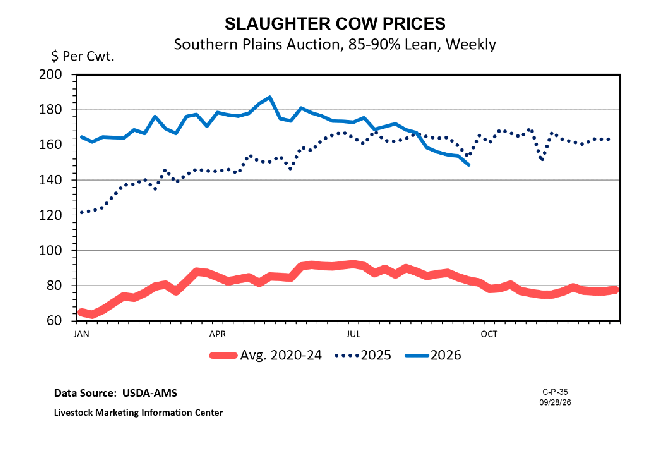
I think the largest factor behind the recent weakness in the cull cow market was the announcement of the plan to increase imports for ground beef production. Cull cow and bull markets are largely driven by trim values and ground beef demand, so it stands to reason that they would be the most impacted. Based on the US Customs’ Commodity Status Report for September 28th, about 37,000 metric tons (MT) tons had been imported under the new tariff rate quota (TRQ) since the first of the month. This is well shy of the September maximum of 100,000 MT.
Source : osu.edu