By Nathan Smith
Peanut farmers are in the middle of peanut harvest with over 50 percent of U.S. peanuts harvested. Near-term needs should be covered due to a record carryover from the near-record 2025 crop of 3.55 million tons (8,400 tons shy of the 2017 record). Harvest is a little behind average because of later plantings and a short stoppage in the Southeast due to Hurricane Isaias. The October U.S. Department of Agriculture (USDA) Crop Production report projects total U.S. production to be 2.56 million tons, nearly a million tons (28%) less than 2025 (Figure 1). The projected yield is about the same as last year at 3,766 pounds per acre. Projected yields have fallen throughout the 2026 crop year due to hot and dry weather in parts of the peanut belt.
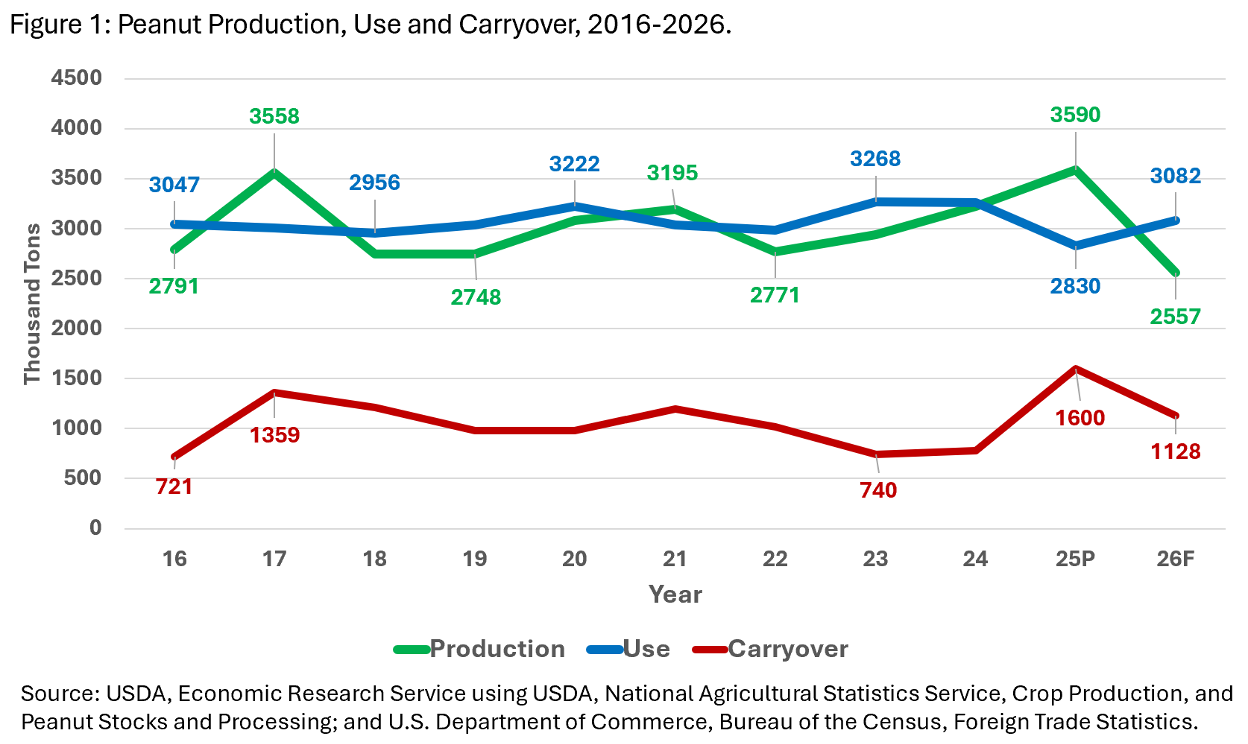
Consumption of peanuts may be described as fairly steady—compared to production from 2016 to 2024—ranging from a low of 2.96 million tons in 2018 to a high of 3.27 million tons in 2023 (Figure 1). However, peanut disappearance dropped to a low of 2.83 million tons during the 2025/26 marketing year while supply jumped to an all-time high, according to the USDA October Oil Crops Outlook report.
Click here to see more...