Farms.com Home   Ag Industry News

A Donald Trump presidency could affect milk supply: Dairy Farmers

Some producers concerned about future production

By Diego Flammini
Assistant Editor, North American Content
Farms.com

Some dairy farmers in the United States are worried about what a possible Donald Trump presidency could mean for the future of their farms and production.

Mark Diederichs, a general manager at Lake Breeze Dairy in Malone, Wisconsin, told Bloomberg that if the businessman is elected as the next president, the farm might not have enough staff to care for the herd because a majority of his staff are immigrants, and Trump has proposed to deport undocumented immigrants.
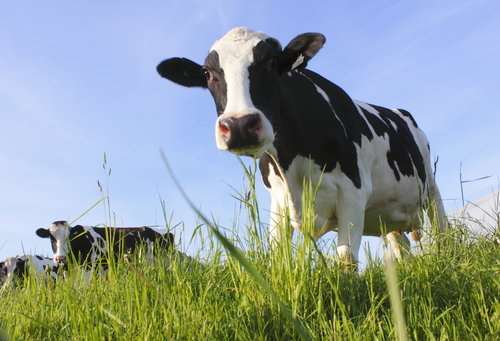
Dairy cow

 “It’s hard to get people that want to come out and do this type of work,” he told Bloomberg.

According to a report conducted for the National Milk Producers Federation, Trump’s plan could result in the closure of nearly 7,000 farms, the loss of more than 200,000 jobs and a 50 billion pound decrease in milk production.

The report also indicated that eliminating immigrant labor could reduce the American dairy herd by 2.1 million cows, see retail milk prices increase by 90 per cent, and reduce the U.S. economic output by $32 billion.

Some producers who were previously in favor of Trump are considering changing their allegiance to protect their livelihoods.

“With my group of friends, we kind of joked around and said, ‘Wow, did you ever think you’d vote for Hillary?”’, Mitch Breuning, president of the Professional Dairy Producers of Wisconsin, told Bloomberg.


Trending Video

Evolution of Beef Cattle Farming

Video: Evolution of Beef Cattle Farming

The Clear Conversations podcast took to the road for a special episode recorded in Nashville during CattleCon, bringing listeners straight into the heart of the cattle industry. Host Tracy Sellers welcomed rancher Steve Wooten of Beatty Canyon Ranch in Colorado for a wide-ranging discussion that blended family history and sustainability, particularly as it relates to the future of beef production.

Sustainability emerged as a central theme of the conversation, a word that Wooten acknowledges can mean very different things depending on who you ask. For him, sustainability starts with the soil. Healthy soil produces healthy grass, which supports efficient cattle capable of producing year after year with minimal external inputs. It’s an approach that equally considers vegetation, animal efficiency, and long-term profitability.

That philosophy aligned naturally with Wooten’s involvement in the U.S. Roundtable for Sustainable Beef, where he served as a representative for the Colorado Cattlemen’s Association. The roundtable brings together the entire beef supply chain—from producers to retailers—along with universities, NGOs, and allied industries. Its goal is not regulation, Wooten emphasized, but collaboration, shared learning, and continuous improvement.