The poultry industry says campaign claims are inaccurate
By Jennifer Jackson
Fast food giants Tim Hortons and Burger King recently announced they will only source chicken that is produced following Global Animal Partnership (GAP) welfare standards. And Mercy For Animals (MFA), an American-based activist organization, said in a Mar. 21 release that it collaborated with the restaurants’ parent company, Restaurant Brands International, on the policy.
MFA made numerous claims about the poultry industry in this release.
“(Chickens) are bred to grow so unnaturally fast that their legs often can't support the birds' own body weight. Many suffer from constant leg pain so severe they cannot stand, and so they spend nearly all their time sitting in their own waste. Continual contact with wet litter causes extreme feather loss and painful sores on the chickens' bodies and feet. Even breathing can be painful, as the air around the birds is acrid with ammonia from the stench of excrement,” according to the release.
Now, Canada’s poultry industry is voicing their concerns about the truthfulness of the organization’s animal care claims.
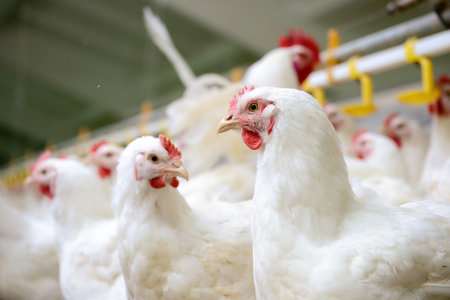
These claims are appalling and harmful to the Canadian poultry industry, according to a Mar. 23 release from the Chicken Farmers of Canada (CFC). The actions of the activist group are “shameful, inaccurate, deliberately misleading, and undermine the hard work and animal welfare standards of local Canadian farmers throughout the country,” according to the release.
Video footage from the MFA campaign appears to be from outside of the country. In Canada, every producer is required to meet strict and enforced animal welfare standards in the Animal Care Program, according to Benoît Fontaine, chair of the CFC.
“Canadian chicken farms are run by hardworking men and women who take to heart their responsibility to uphold animal health and welfare on their farm and share Canadian values,” Fontaine said in the release. “They are proud ambassadors in promoting and defending their good management practices, and believe that there is no defense for the mistreatment of birds.”
The Animal Care Program requires all producers be audited annually; recently, the CFC passed their own third party audit with flying colours. The Animal Care program follows the National Farm Animal Care Council’s code of practice, determined by a wide variety of stakeholders.
To counteract the MFA’s claims, the CFC released their own facts about poultry production in Canada:
- “Over 90 per cent of Canada’s chicken farms are family owned and operated. The notion of faceless, nameless and heartless ‘factory farms’ is fiction.
- “Canada’s farmers operate within a system in which they are paid for each bird that is processed. Not only is it common sense for farmers to take care of their birds, its good economic sense as well.
- “There is a robust, third-party-audited, mandatory Animal Care Program that is administered across all Canadian chicken farms.
- “In Canada, litter is removed after every single flock and replaced with fresh bedding prior to the placement of new chicks. Chickens are not raised on ‘old’ litter. Barns are cleaned and litter replaced with each flock. Fresh bedding decreases ammonia concerns from previous flocks and barns are monitored for ammonia levels.
- “The density of Canadian chicken production is lower or consistent with other countries. Canadian broiler chickens are not caged and are raised without the use of steroids or hormones. The number of chicks placed in the barn is pre-determined to ensure that density limits are not surpassed and as they age they continue to have room to roam.
- “Chicken health is continually improving. Bird mortality, condemnations, lameness, and ascites have decreased significantly over the past decades.”
Farms.com has reached out to some Ontario chicken producers for their comments on the activist group’s claims.