Farms.com Home   Ag Industry News

Farms in northern Ontario hiring Mexican migrant workers

Migrant workers coming to Canada are similar to Canadians finding work elsewhere

By Diego Flammini
Assistant Editor, North American Content
Farms.com

At least one farm in northern Ontario is relying on Mexican migrant workers to ensure the work is completed on time.

“Everything is done by hand, we plant by hand (and) harvest by hand,” Mitch Deschatelets, manager of Leisure Farms in Sturgeon Falls, told CBC. “It takes a lot of hands to be able to do all that.”

According to Employment and Social Development Canada, there were 24,223 workers in Ontario as part of the Season Agricultural Worker Program in 2015. Deschatelets told CBC he has about 13 migrant workers on his farm.

“Every year there’s less and less Canadians wanting to do these types of jobs,” he told CBC.
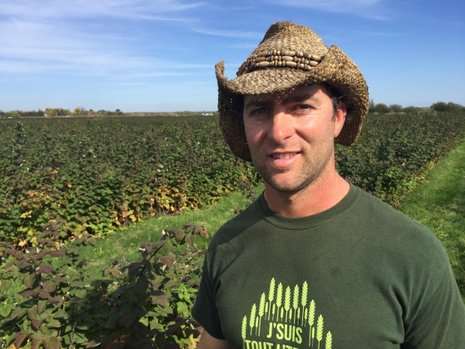
Mitch Deschatelets
Mitch Deschatelets
Photo: Erik White/CBC

Migrant workers who come to Canada for work are similar to Canadians that travel for employment.

“Like diamond drillers, they’ll leave for months at a time, they’ll make big bucks, but they’re gone for that time. So it’s a balance,” he said.

Deschaelets said he’s developed a relationship with some of his workers that extends outside of the workplace.

“Yes, I’m their boss, but I consider them good friends.”


Trending Video

Evolution of Beef Cattle Farming

Video: Evolution of Beef Cattle Farming

The Clear Conversations podcast took to the road for a special episode recorded in Nashville during CattleCon, bringing listeners straight into the heart of the cattle industry. Host Tracy Sellers welcomed rancher Steve Wooten of Beatty Canyon Ranch in Colorado for a wide-ranging discussion that blended family history and sustainability, particularly as it relates to the future of beef production.

Sustainability emerged as a central theme of the conversation, a word that Wooten acknowledges can mean very different things depending on who you ask. For him, sustainability starts with the soil. Healthy soil produces healthy grass, which supports efficient cattle capable of producing year after year with minimal external inputs. It’s an approach that equally considers vegetation, animal efficiency, and long-term profitability.

That philosophy aligned naturally with Wooten’s involvement in the U.S. Roundtable for Sustainable Beef, where he served as a representative for the Colorado Cattlemen’s Association. The roundtable brings together the entire beef supply chain—from producers to retailers—along with universities, NGOs, and allied industries. Its goal is not regulation, Wooten emphasized, but collaboration, shared learning, and continuous improvement.