Farms.com Home   Ag Industry News

Winter conditions slows harvest in Alberta

Up to 40 per cent of crops still need to be harvested

By Diego Flammini
Assistant Editor, North American Content
Farms.com

Some farmers in Alberta were able to have a true long weekend. Not necessarily because they wanted to, but because Mother Nature forced them to.

“Not to have to work over Thanksgiving weekend and visit my family and friends was a bonus, but looking out the window to see it snowing steadily was really a challenge to truly enjoy Thanksgiving,” Humphrey Banack told CBC.

Banack, who farms southeast of Edmonton and is the first vice president of the Alberta Federation of Agriculture, estimates between 60 and 70 per cent of the province’s harvest is complete. He hopes some cooperative weather can help producers finish up.

“If we can get back out and harvest this crop and put it into the bin, the losses will be significantly less than if it has to overwinter,” he told CBC.

Glen Stankievech, who farms near Trochu, Alberta, told CBC the value of his barley crop could drop by as much as 50 per cent if he can’t finish harvesting until spring.
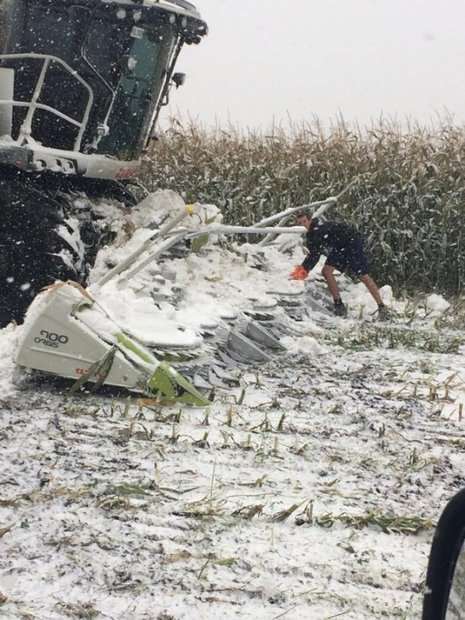
Glen Stankievech
Snow in Alberta put a stop to harvest over Thanksgiving weekend.
Photo: Glen Stankievech

“A pay cut of half is huge,” he said.

Stankievech estimated he still has between $600,000 and $700,000 left in the field.

“That’s a real hit to our cash flow not to have that,” he said.


Trending Video

Evolution of Beef Cattle Farming

Video: Evolution of Beef Cattle Farming

The Clear Conversations podcast took to the road for a special episode recorded in Nashville during CattleCon, bringing listeners straight into the heart of the cattle industry. Host Tracy Sellers welcomed rancher Steve Wooten of Beatty Canyon Ranch in Colorado for a wide-ranging discussion that blended family history and sustainability, particularly as it relates to the future of beef production.

Sustainability emerged as a central theme of the conversation, a word that Wooten acknowledges can mean very different things depending on who you ask. For him, sustainability starts with the soil. Healthy soil produces healthy grass, which supports efficient cattle capable of producing year after year with minimal external inputs. It’s an approach that equally considers vegetation, animal efficiency, and long-term profitability.

That philosophy aligned naturally with Wooten’s involvement in the U.S. Roundtable for Sustainable Beef, where he served as a representative for the Colorado Cattlemen’s Association. The roundtable brings together the entire beef supply chain—from producers to retailers—along with universities, NGOs, and allied industries. Its goal is not regulation, Wooten emphasized, but collaboration, shared learning, and continuous improvement.