The goal is to target individual weeds and pests in farmers’ fields when spraying
Staff Writer
Farms.com
Several players in the Western Canadian ag industry recently partnered to advance the use of artificial intelligence (AI) in product application.
Protein Industries Canada (PIC), Precision.ai Inc., Sure Growth Solutions Inc., Exceed Grain Marketing and the Global Institute for Food Security (GIFS) at the University of Saskatchewan (USask) are partnering for this $26.2-million three-year project.
Ian Stavness is an associate professor in computer science at USask and a lead researcher on this project.
“The goal is to target individual weeds in a farmer's field and spray just those weeds,” Stavness told Farms.com. This application strategy reduces input costs and the total amount of herbicide or pesticide that’s used.
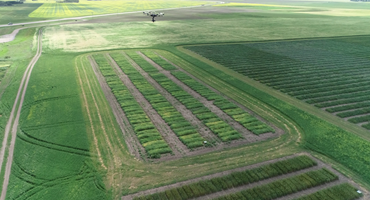
This technology could decrease herbicide use by 95 per cent while continuing to ensure good yields, project partners estimate. This tech could also save farmers $52/acre in the growing season, the release said.
Prior to the launch of this collaboration, Stavness and the team at GIFS had already begun developing technology to identify plants in pictures taken from drones. The researchers will use this data in the new project.
Photo credit: Seungbum Steve Ryu photo
“We already have a lot of AI technology that is developed for wheat, canola and lentil crops through the Global Institute of Food Security. So, we will leverage all the datasets we've already collected on the university research fields and combine that with new information that’s collected in farmer's fields. We’ll merge those (datasets) together and then providing this new technology is the next step,” said Stavness.
The goal is to retrofit the AI technology on existing sprayer equipment so farmers can make precise product applications.
“We'll push these new technologies out with the partners throughout the project and get feedback from growers and agronomists. I think, within the next season, we'll start to see initial prototypes,” said Stavness.
Work in this field continues to expand and its potential influence in the industry is significant, said Stavness.
“These technologies where we can … actually make useful, actionable information from massive datasets – that's the critical step. A lot of data is available, but actually analyzing it in a way to make it useful – that's where we'll see a lot of value add to the agricultural sector,” he said.
Photo credit: Univeristy of Saskatchewan photo