Special weather statement issued for much of Southern Ontario
By Diego Flammini
Assistant Editor, North American Content
Farms.com
Thirsty crops in Ontario are in store for a big drink come Tuesday.
A special weather statement has been issued by Environment Canada for various parts of Southern Ontario.
“A significant widespread rainfall is expected beginning Tuesday morning or afternoon and ending Tuesday night,” the statement says. “Rainfall amounts will range from 25 to 40mm in most places. A few areas may see higher amounts up to 60mm.”
Many regions in Southern Ontario fall under the special weather warning, but some, including Grey-Bruce, Huron-Perth and Waterloo-Wellington, are under a rainfall warning.
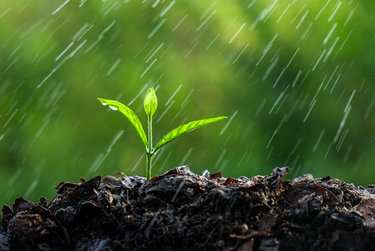
The rainfall warning says anywhere between 40 to 60mm of rain is likely and a few thunderstorms are expected.
Despite the prospect of a good rain, it may be too late for some crops.
“I think that while it doesn’t hurt I don’t know how much it’s going to help for this year’s crop,” Barry Sneft, chief executive of Grain Farmers of Ontario told the London Free Press.
Sneft said that rain is great, but only to a certain extent. Especially as harvest season approaches.
“After that, it could affect the quality and timeliness of the harvest,” he told the London Free Press.