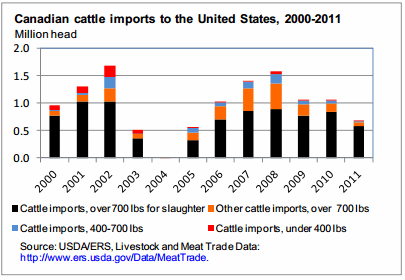
U.S. cattle imports for 2011 totaled 2.1 million head, marking an 8 percent decline from year-earlier levels. Despite a diminished total North American cattle inventory, U.S. cattle imports could have been much lower had it not been for drought extending into Mexico and prompting producers there to market cattle in the United States. Cattle imports from Mexico were 16 percent higher year-overyear, but the increase was not enough to offset the 35-percent decline in Canadian cattle imports. Herd rebuilding has been underway in Canada as cows imported for slaughter declined by 39 percent compared to imports of all cattle for slaughter (-31 percent). The increase in Mexican cattle imports was solely attributed to increased imports of lighter weight feeder cattle (less than 400 pounds). Many of these calves directly entered feedlots due to strong U.S. demand and drought conditions that limited grazing options in the Southern Plains.
U.S. cattle imports in 2012 are forecast to be 2 percent lower, at 2.05 million head. Severe-to-exceptional drought conditions are still present, extending into Northern Mexico, where feeder cattle imports to the United States primarily originate. U.S. import levels should thus remain elevated from Mexico at least through the first half of the year. Cattle numbers and calf production are expected to expand slightly in Canada this year, increasing the availability of fed cattle for export (and immediate slaughter), particularly in the second half of the year. (In the last 5 years, cattle over 700 pounds for immediate slaughter averaged 70 percent of total Canadian cattle imports). Imports of cows for slaughter from Canada should remain at lower levels, as Canadian producers continue to hold back breeding stock as they expand herds.
Source: USDA.