American farmers continue to be more optimistic about their current situation even during an ongoing pandemic. The December Purdue Ag Economy Barometer survey results reflect improvements in trade and government aid.
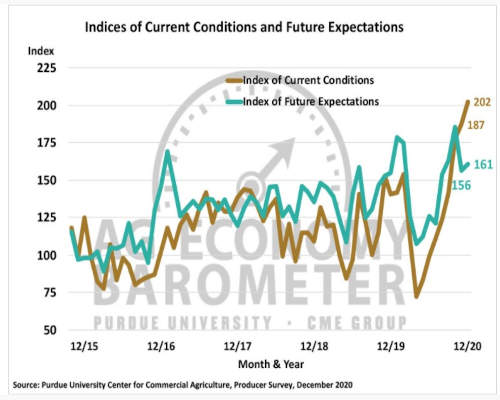
When initially faced with the coronavirus, farmers' short-term confidence reached a record low with ethanol production down and supply chain issues.
Nine months later, optimism among agricultural producers about their current economic conditions hit the highest level since the survey began in 2015. Purdue University agricultural economics professor and barometer co-author Michael Langemeier said there are two reasons for that.
“And that's, for obvious reasons, is very strong government payments, in 2020, but also a very large increase in prices, particularly corn and soybean prices from early September all the way through December,” said Langemeier.
A record number of respondents said they are more inclined to make farm capital investments. About 25 percent more compared to November expect farmland values to increase within the next year.
The barometer’s December 2020 responses also show American farmers continue to worry over the future of agricultural production with the incoming Biden administration.
Concerns remain over changes to environmental and tax policies that would affect the industry and could hurt them economically.
China’s imports increased towards the end of 2020, raising prices of corn and soybeans. But survey respondents remained less optimistic than prior to the November elections that a trade deal beneficial to American farmers will be made with China.
Langemeier said that’s to be expected.
Click here to see more...