Farms.com Home   News

Autumn Harvest Still Looks Warmer Than Normal

By Jim Noel

The September to November timeframe still looks warmer than normal, somewhat like last year but not as warm in September into October as last year with a medium to high confidence in the outlook. Rainfall looks generally close to normal through November. Confidence in the rainfall is not as high and is considered medium as there is some uncertainty in the preferred tropical moisture flow. Like last year the first freeze looks to be normal to later than normal in October.

For September, the first half looks slightly warmer and drier than normal (see latest rainfall outlook in attached image). Uncertainty grows in the second half of September as it might turn wetter than normal. The second half will completely depend on tropical moisture return from the south. Therefore, a near normal rainfall pattern is currently anticipated when you average out the two September periods. 
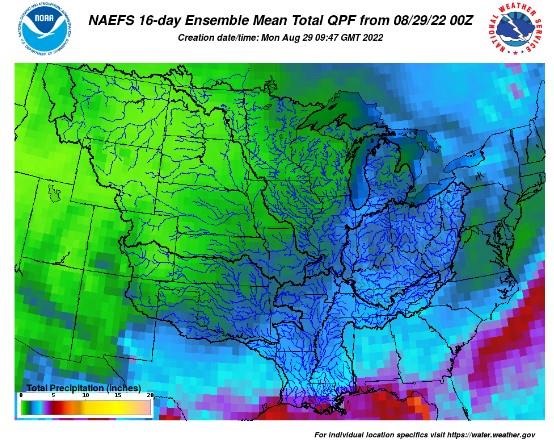
 

Two Week Rain

Two Week Rain

For October and November above normal temperatures will persist with precipitation somewhat variable around normal with a slight lean toward drier than normal.

It does not appear we will see any early freeze this autumn which is good news. Expect the first freeze about on time to a week or two later than normal in October.

The latest climate outlooks can be found by NOAA at: https://www.cpc.ncep.noaa.gov

Finally, for the first half of September rainfall is forecast to average 1-2 inches which is not far from average.

Source : osu.edu

Trending Video

Supplemental Nitrogen on Soybeans: Can Early Nitrogen Increase Yield?

Video: Supplemental Nitrogen on Soybeans: Can Early Nitrogen Increase Yield?

Can supplemental nitrogen help soybeans reach higher yield potential? Technical Agronomist Tim Sickman walks through an ongoing trial at the Nutrien Innovation Farm in Owensboro, Kentucky, exploring whether a modest amount of nitrogen applied at planting can support higher-yielding soybean environments.

The trial compares 30 pounds of supplemental nitrogen across both 15- and 30-inch rows, along with treatments that include sulfur and micronutrients. Similar trials conducted in 2024 and 2025 delivered a six- to seven-bushel yield response, prompting the team to expand the research this season.

Early observations show that treated soybeans are slightly taller and averaging about two additional nodes on the main stem. These added nodes could create more opportunities for blooms and pods, but the true results will come at harvest when the team evaluates pod development, seed fill and final yield.

In This Video:

Why high-yield soybeans may need supplemental nitrogen

Results from the 2024 and 2025 trials

Nitrogen treatments in 15- and 30-inch rows

Fertilizer placement and application methods

Differences in plant height and node counts

Potential effects on pod development and yield