Rehydration is the first step in helping calves with scours.
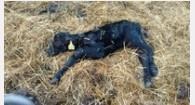
Scours can affect calves at any age, but those 3 to 21 days old are especially susceptible.
Cattle producers should monitor their newborn calves for scours, or calf diarrhea, North Dakota State University Extension Service livestock experts advise.
“Calves running, nursing and sleeping are signs of healthy calves,” says Karl Hoppe, Extension’s area livestock systems specialist at the Carrington Research Extension Center. “A calf that isn’t joining the herd is a sure sign that something isn’t right.”
Scours is an intestinal tract infection. Symptoms include a wet tail, a puddle of liquid manure, blood oozing out of the anus, listlessness and dehydration. Calves with scours also have sunken eyes and may feel cool to the touch.
“Rehydration is the first step of therapy to help the scouring calf because in an attempt to rid the cause of the intestinal infection, the body tries to flush the bad bugs out of the body,” Extension veterinarian Gerald Stokka says.
He recommends producers immediately provide calves suffering from scours with liquids and electrolytes that are easy to absorb.
“Milk isn’t a good choice because it takes longer to digest and also can be a great media for unwanted bacterial growth,” he notes. “Intravenous administration of electrolytes may be needed to rehydrate a severely dehydrated, listless calf quickly.”
Calves with scours need constant rehydration, according to the specialists. Calves can require 6 to 10 quarts of electrolyte solution per day to replenish body fluids lost due to profuse diarrhea.
For example, a 100-pound calf that is 10 percent (severely) dehydrated needs 10 pounds (6 quarts) of fluids just to replace the lost fluids.
“Do not replace it all at once, but over several feedings, with no more than 2 quarts at a time,” Hoppe says.
“Some calves may not be strong enough to nurse; however, most commercial electrolyte solutions contain the energy source dextrose,” he adds. “When the calves have been rehydrated, they should be allowed to nurse because oral replacements do not meet the nutritional requirements of the calf.”
Getting the calf out of the wind and in a warm barn also helps because scouring calves have difficulty staying warm.
Antibiotic therapy may be indicated when producers are concerned that the intestinal infection has become systemic, Stokka says. Administering liquid antibiotics orally can be effective with bacterial infections when the digestive tract is functional, while antibiotics in pill form have a hard time dissolving and absorption is limited due to intestinal damage.
While scours can develop at any age, producers should be particularly watchful with calves that are 3 to 21 days old.
Scours can be caused by bacteria (E coli, Salmonella, clostridium perfringens), viruses (rotavirus, coronavirus) and parasites (cryptosporidium and coccidia). Scours often is caused by a combination of infectious agents.
“Adequate colostrum intake and reduced weather stress, plus clean bedding or new pasture, help reduce the number of new cases and exposure to infective agents,” Hoppe says. “Consider moving noninfected calves to a new pasture or a cleaned and bedded pen.”
Calves out of first-calf cows seem to have a higher incidence of scours. This may be due to a lack of adequate passive immunity transferred to the calf and a higher exposure to scours organisms because heifers normally are confined to less space for monitoring purposes, the specialists say.
Some strains of scours are zoonotic, meaning that it can be spread from calves to humans. The specialists recommend producers use disposable latex or nitrile gloves when working with calves, disinfect clothes and equipment that has come into contact with sick animals, and wash their hands before eating or putting things in their mouth.
Source:ndsu.edu