Our world is overcome with plastic. About 90 percent of the plastics we use are never recycled, leaving us literally drowning in plastic – in our landfills, incinerators, oceans, and forests.
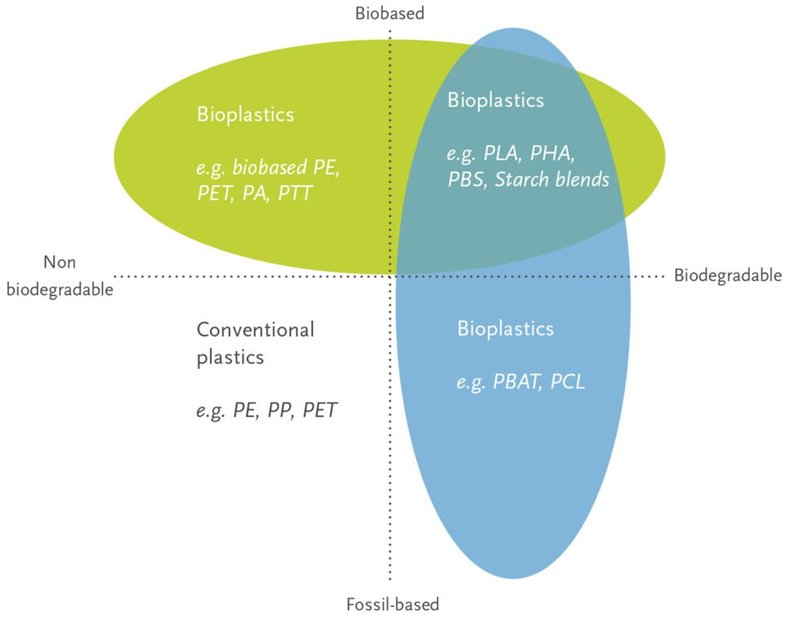
The solution is bioplastics. Bioplastics can be divided into three categories:
- Biobased bioplastics are identical to their conventional petroleum-based plastic counterparts with the exception that they are made in whole or in part from biobased inputs. They can be recycled in existing recycling systems.
- Biodegradable bioplastics are made from fossil-based inputs that are not renewable. These types of bioplastics may be compostable.
- Biobased, biodegradable bioplastics like those made from corn or sugar beets. They are made from renewable resources and are fully compostable. These best solve our plastics problem as they contribute to less plastic waste in landfills and reduced emissions.
Plastics made from corn are called PLA or Polylactic Acid. Discovered by Wallace Corothers (the inventor of nylon) back in the 1920s, it was not immediately accepted as a commercial material. By 2010, PLA was the second most valuable bioplastic in the packaging market.
PLA is in the biobased, biodegradable bioplastic class and it has many proponents for use. Corn-based plastics are made completely from renewable raw materials and optimal conditions will speed up the biodegradation process, though even in slower conditions, the degrading will still be complete. PLA can also be used in regular plastic manufacturing plants, so no additional expenditure needs to be made by the companies to switch to PLA plastics. This characteristic also makes it easy to use worldwide.
Currently, corn-based plastics are more expensive than petrochemical plastics and corn-based plastics do not stand up as well to extreme heat.
But, for consumers that are motivated to reduce fossil fuel consumption or bring an end to the plastics in our environment, corn-based plastic is an attractive option. In addition to these important benefits, converting our plastic use from petrochemical plastics to corn-based plastics would boost market opportunities for family farmers and boost economic activity in rural communities.
There are so many reasons to choose bioplastics – which speaks to you?
https://pbpc.com/bio-based-plastics-101/
https://www.sourcegreen.co/plastics/pla-did-it-start-the-bioplastics-trend/#:~:text=PLA%20is%20made%20from%20entirely,also%20listed%20as%20being%20compostable
Click here to see more...