Farms.com Home   News

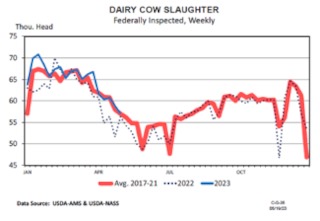
Dairy Cow Slaughter Above 2022

Year to date calf slaughter totals are down more than 15 percent, and nearly 40 percent below the five year average. Calf slaughter is primarily dairy bred calves that enter the veal market. The veal market has seen declining consumption for several years, and the pandemic accelerated that trend to some extent. Cold storage numbers for veal at the end of the first quarter showed supplies on hand are down 40 percent from last year.

Dairy cow slaughter has been above last year but is tracking very closely with the five-year average.
livestock

April’s milk production report from last Friday by USDA NASS showed the U.S. milk cow herd is shrinking. Total U.S. milk cows shed 16,000 head compared to the previous month but are still above a year ago even though milk prices are well below last year’s levels.

Source : iastate.edu

Trending Video

What Does 20 MILLION Hogs a Year Look Like?

Video: What Does 20 MILLION Hogs a Year Look Like?


?? The Multi-Plant System Processing 20 Million Hogs Annually in the Midwest JBS USA operates multiple large-scale pork processing facilities across the Midwest, including major plants in Iowa, Minnesota, and Indiana. Combined, these facilities have the capacity to process approximately 20 million hogs annually.

Each plant operates high-speed automated slaughter systems capable of processing up to 20,000 head per day, followed by fabrication lines that break carcasses into primals, sub-primals, and case-ready retail products.

Hog procurement is coordinated through electronic marketing platforms that connect regional contract finishing operations and independent producers to plant demand schedules. This digital procurement system allows for steady supply flow and scheduling efficiency across multiple facilities.

Processing plants incorporate comprehensive food safety systems, including pathogen intervention technologies, rapid chilling processes, and integrated cold-chain management. USDA inspection is embedded throughout the harvest and fabrication stages to ensure regulatory compliance and product integrity. Finished pork products — from bulk primals to retail-ready packaged cuts — are distributed through coordinated logistics networks serving domestic and export markets.