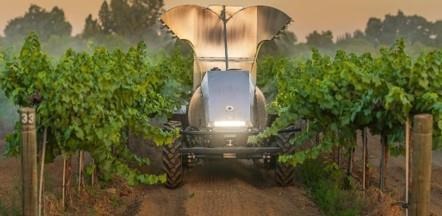
GUSS Automation is turning heads again with the cutting-edge autonomous herbicide sprayer. Herbicide GUSS is the first and only autonomous herbicide orchard sprayer on the market. This high-tech herbicide sprayer removes the driver from the tractor to save labor and eliminate exposure to the chemicals being sprayed. A single operator can monitor any combination of up to eight GUSS, mini GUSS and Herbicide GUSS sprayers from the safety of their vehicle.
With growers looking to improve productivity, increase precision and efficiency, reduce operational and overhead costs, and enhance worker safety, Herbicide GUSS is the solution to meet and exceed these needs. Nine sensors on the sprayer detect, target and spot spray weeds on the orchard floor, which reduces material usage and drift during application. Reducing the amount of material being sprayed increases safety for the operator, environment, and food produced.
“Our growers have been asking for an autonomous herbicide machine. We took that concept to the next level by implementing weed detection technology to give the grower a machine that provides immense value. Lower chemical usage helps the grower reduce costs and is a benefit to the environment,” said Gary Thompson, COO at GUSS Automation.
GUSS Automation’s autonomous sprayers were developed out of necessity. Orchard spraying business owner, Dave Crinklaw dealt with the shortage of agricultural labor in his own business and he found himself looking for answers and the solution came in the form of a driverless orchard sprayer. After developing and successfully introducing a fleet of GUSS (Global Unmanned Spray System) sprayers into his own custom application business, Crinklaw decided to make GUSS autonomous sprayers available for any grower to own.
Herbicide GUSS is 23.5 ft. long, 6.5 ft. tall and ranges from 8.3 to 19 feet wide depending on the boom extension. The hydraulic controlled, height adjustable booms accommodate 18-to-22-foot row spacing and tilt for varying berm sizes. The breakaway booms prevent damage to trees and crops. This autonomous herbicide sprayer is designed to decrease labor and material costs while increasing efficiency, precision, and safety for growers worldwide.
With the newly formed joint venture between GUSS Automation and John Deere, Deere is enthused about the solutions Herbicide GUSS will provide for growers. “The announcement of Herbicide GUSS underscores why we are so excited to have GUSS as part of our High Value Crop solutions lineup,” said Greg Christensen, John Deere Marketing Manager for 5 Series Tractors and High Value Crops. “The GUSS team has years and depth of experience in the high-value crop spraying business. They were their own first customers, so they are able to solve true customer needs very quickly. Orchard and vineyard customers in the high-value crop space face many labor, safety and sustainability challenges. GUSS, Mini GUSS and now Herbicide GUSS can help producers overcome these challenges.”
Source : GUSS