By Sarah Lancaster
Weed management encompasses more than controlling actively growing weeds. Farmers can be proactive to help prevent the future spread of weeds. Two different management practices are discussed in this article: fall scouting for weed escapes and equipment cleaning.
Fall scouting can help plan for future control
Weeds that escape control by in-season management practices can cause several problems, including the possibility of reduced harvest efficiency and crop yield. Even if these factors do not justify an herbicide application, it is important to consider the future costs of seeds produced by those escapes – particularly if those escaped weeds produce a lot of seed and/or are herbicide resistant.
Just a few escapes of species such as waterhemp or Palmer amaranth can have a big impact (Figure 1). For example, research conducted in Georgia showed that one female plant in five acres added about two million seeds per acre to the soil. Those seeds can have impacts for many years. It took six years of total Palmer amaranth control to deplete the seedbank by 98% in Texas. In some situations, scouting during the weeks leading up to harvest may provide an opportunity to remove these plants by hand to reduce the number of seeds in the soil.
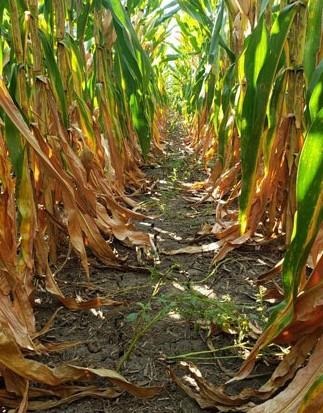
Figure 1. The waterhemp plants growing between these corn rows may not have reduced grain yield, but they will produce seed that must be controlled in future years. Photo by Sarah Lancaster, K-State Research and Extension.
Scouting for weeds at harvest, even if you simply make notes from the combine, is important for planning future weed management.
When scouting, make notes about:
- which weed species are present,
- where weed escapes are present, and
- any changes in the size or location of areas with weed escapes.
Some observations might be the result of soil or environmental conditions, while others might suggest problems with the herbicide selection or application equipment. However, some of these escapes might indicate the presence of herbicide-resistant weeds in your field – especially if the same herbicide program has been used for a number of years. Two examples of observations that might indicate herbicide resistance are 1) a growing patch of a particular species, or 2) herbicide failure on a few plants of a single species that is normally controlled.
Stop spreading weed seed during harvest activities
Weeds can spread in a variety of ways, including on farm equipment. As you move harvest equipment from field to field, be aware of the potential to spread weed seed – especially if uncontrolled weeds are known or suspected to be herbicide resistant. Some steps to prevent the spreading weeds when moving harvest equipment from one field to another are listed below.
- Clean new-to-you equipment so someone else’s weeds are not introduced to your farm.
- If possible, harvest fields with excellent weed control first.
- Harvest fields where weeds are or might be herbicide resistant last.
- Harvest around areas with extremely dense weed populations.
- Slow the combine to ‘self clean’ between fields:
- run the unloading auger empty for a minute or two
- open grain elevator doors, rock tramp, and unloading auger sump then run the separator with maximum air flow and suction
- Use an air compressor to remove material remaining in rock trap and grain auger and from the head, feeder house, straw spreader
- Take half a day to do a deeper clean when possible
- Check fall-tillage equipment between fields
It is very difficult to completely remove weed seeds from harvest equipment. However, taking a few minutes to reduce the number of seeds on your harvest equipment may save time and money in the future.
Source : ksu.edu