By Sara Bauder
Forages are a very important part of the South Dakota livestock and cropping industries, especially during dry times. Often, producers have difficulties finding enough forage for their herd or locating a fellow producer to buy, sell or rent forages and grazing acres too. South Dakota now has two widely recognized, free resources to aid in these connections.
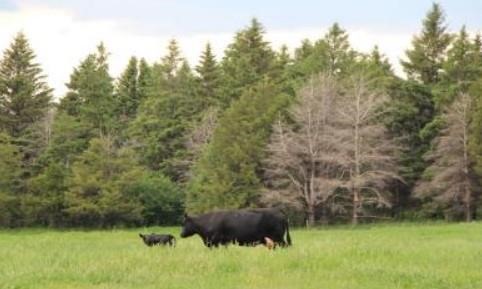
A cow and calf graze in eastern South Dakota.
Grazing reduces nutrient export from our crop and hay fields and recycles nutrients, while aiding in weed suppression. As the use of cover crops in cropping systems grows in South Dakota, and cattle producers continue to seek additional perennial and annual forages, the South Dakota Grazing Exchange serves as a connection tool for both forage and cattle producers.
The South Dakota Grazing Exchange is a free, easy-to-use online map that offers a platform for producers throughout the state and region to connect; information is categorized based on forage and livestock grazing opportunities. This website provides forage growers free advertising of available grazing acres and details associated with the land parcel(s). Livestock growers alike, have the opportunity to post details regarding animals they are willing to re-locate for grazing.
Source : sdstate.edu