By Maninder Singh and Thomas Siler et.al
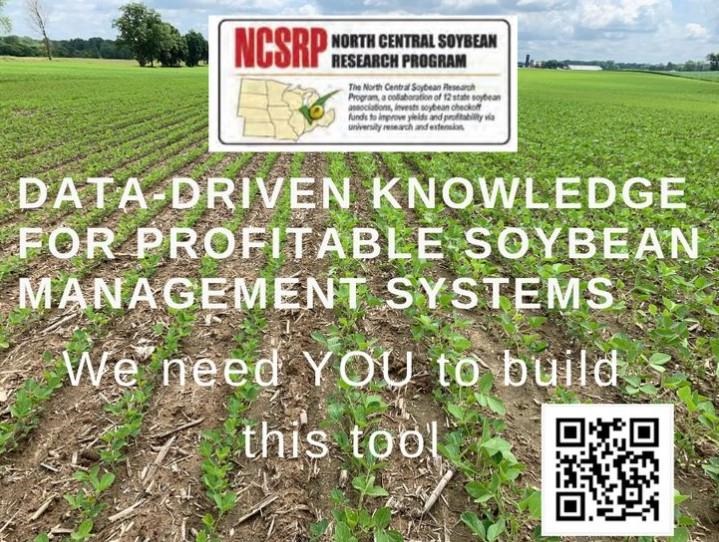
With funding support from North Central Soybean Research Program (NCSRP), Michigan State University Cropping System Research Program in cooperation with Michigan State University Extension are initiating a multi-state, three-year project focused on helping producers optimize soybean production. To do this, we will be analyzing farmer survey data about field management, costs and yields. Survey data collected from Michigan soybean growers will help in the development of a new online tool that can provide management guidelines for your specific field.
Our objective is to develop a new online cropping system optimization decision tool that can provide management guidelines for your specific field. Over the last decade, massive amounts of data have been generated in soybean production and has been used to develop management guidelines across larger regions. However, there has been a limited success in identifying field-specific guidelines. This project will focus on generating field-specific management decisions focused on not only maximizing yield but also profits by accounting for your input costs.
Take the NCSRP Soybean Producer Survey
Our approach consists of collecting data from as many Michigan fields as possible. The survey takes about 10-20 minutes and asks information about soybean field conditions, management practices, crop history, yield, seed, fertilizer and pesticide inputs for your operation. Once the survey is complete, we will add soil, weather and satellite image data, based on the field location. We will then use these data to develop a decision-making tool that will make in-season recommendations specific to your field.
Following development, the publicly available tool will allow producers to drop a pin in a field, enter input variables, and receive crop management decision help directly and through online scouting tools such as Sporecaster. The tool will recommend management practices that are specific to your fields to improve soybean production. By providing your field data, you can contribute to the development and accuracy of this tool. Collecting survey information about both management practices and expenses will allow this tool to recommend practices that go beyond increasing yield and allow growers to identify management practices that will optimize profits. The more data we collect, the more accurate the tool will be.
Additionally, Michigan producers who participate by July 15, 2022, will be entered into two drawings for cash prize of $1,000 and $500. Each field you provide information for will be one entry in the drawings (e.g., four fields equals four entries). The data you provide will stay confidential.
Source : msu.edu