Farms.com Home   News

Nebraska Land Values Drift Lower

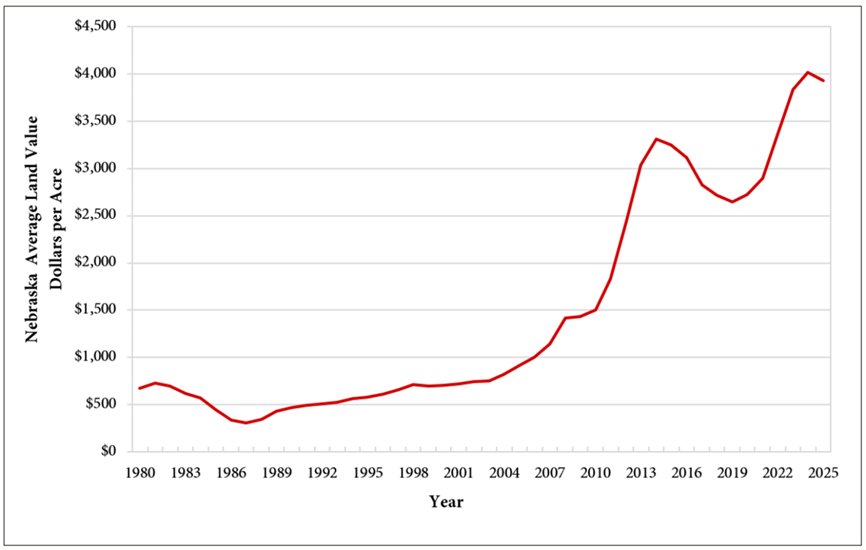
The Center for Agricultural Profitability (CAP) at the University of Nebraska reports the average value for agricultural land in Nebraska is lower this year compared to last year. This year’s average value, $3,935 per acre, is 2% less than last year’s record-setting $4,015 per acre. The weakening comes after five consecutive years of climbing values. The figures come from CAP’s annual survey of land appraisers, farm and ranch managers, agricultural bankers, and other real estate professionals.
crops

crops

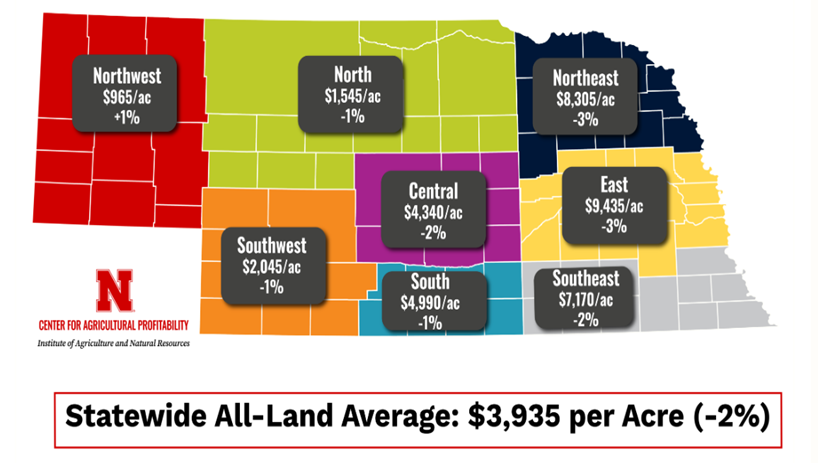
Land values were off across all regions except the Northwest where the average value rose 1% (Figure 2). The declines were most pronounced in the Northeast and East where values fell by 3%. These regions are dominated by crop production, thus lower commodity prices and deteriorating profitability in crop production likely prompted the softening land prices.

Click here to see more...

Trending Video

What Is Remote Sensing In Precision Agriculture? - The World of Agriculture

Video: What Is Remote Sensing In Precision Agriculture? - The World of Agriculture

What Is Remote Sensing In Precision Agriculture? In this informative video, we will dive into the fascinating world of remote sensing and its role in precision agriculture. Remote sensing technology allows farmers to gather critical information about their fields without the need for physical presence. By utilizing satellites, drones, and aircraft equipped with advanced sensors, farmers can monitor various aspects of their crops, from temperature and moisture levels to overall plant health.

We will explore how the data collected through remote sensing can empower farmers to make strategic decisions for their crops. With the ability to identify specific areas that require more water or nutrients, farmers can optimize resource usage, leading to healthier plants and improved yields.

Moreover, remote sensing plays a vital role in tracking crop growth over time. By comparing images taken at different growth stages, farmers can evaluate their crops’ development and adjust their management practices accordingly.