A team led by University of Illinois researchers has developed a test they say can detect SARS-CoV-2 in any species of wild or domesticated animal.
Their research, published today in mSphere, details the development and validation of their monoclonal antibody (mAb)-based blocking enzyme-linked immunoassay (bELISA) test, which the study authors say is a useful tool for identifying potential new animal reservoirs to prevent future coronavirus outbreaks.
Assay targets virus's N-protein
Most antibody tests are designed for humans and rely on special species-specific chemical reagents, most of which aren't commercially available, impeding pan-species research. But this one detects antibodies against the virus's N-protein, which is consistent across species, making it a better target than the membrane-bound viral proteins usually used in these tests.
"The N-protein is more abundant and it is more conserved than the proteins used in most tests," lead author Ying Fang, PhD, said in a University of Illinois at Urbana-Champaign news release.
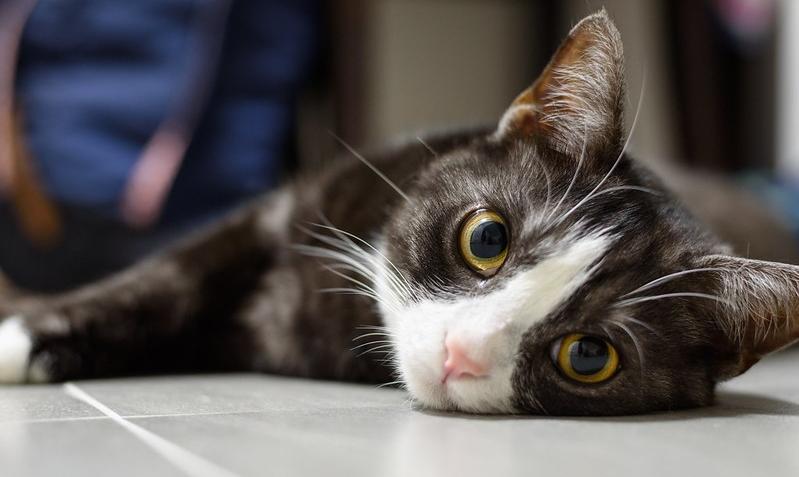
In addition to humans, SARS-CoV-2 has been known to infect cats, dogs, deer, mink, lions, snow leopards, and tigers. "These findings cause great concerns on the potential for human to animal and animal to human transmission, along with the appearance of viral mutations as the virus spillover between species," the authors wrote.
Useful surveillance tool
The researchers created the test by coating an ELISA plate with the wild-type virus's N-protein and adding a pooled serum sample from 24 cats experimentally infected with the SARS-CoV-2 Alpha, Delta, or Omicron variants. If infected with SARS-CoV-2, the animal's serum will contain anti–N-protein antibodies, which will bind to the plate.
The team then washes the plate and adds a secondary biotin (B vitamin)-tagged mAb that targets the N-protein. If the animal is infected, its antibodies will block the secondary antibodies from binding to the N-protein. If uninfected, the mAbs will attach to the coated plate and generate a color signal when certain chemicals are added to the plate.
The researchers validated the tool using serum samples from animals with known infection status, achieving a diagnostic sensitivity of 97.8%, and a diagnostic specificity of 98.9%.
The mAb-based bELISA could be a useful tool for field surveillance to determine the prevalence of COVID-19 in animal populations and identify potential new animal reservoirs.
Sensitivity is the probability that a test correctly identifies all positive cases; the higher the sensitivity, the lower the likelihood of false-negative results. Specificity, on the other hand, is the ability to identify those who don't have a condition; the higher the specificity, the lower the risk of false-positive results. The test's area under the curve (AUC), which represents accuracy, was 0.998, demonstrating high accuracy.
The study authors said the test shows high repeatability as determined by a low coefficient of variation, or ratio of the standard deviation to the mean, between runs (7.2%), within runs (4.9%), and within the plate (3.2%). The assay was able to detect SARS-CoV-2 antibodies in the experimentally infected cats as soon as 7 days after infection and in two of three dogs with COVID-like symptoms being treated at a veterinary clinic.
"The panel of mAbs generated in this study provides valuable reagents for disease diagnostics and viral pathogenesis studies," the researchers wrote. "The mAb-based bELISA could be a useful tool for field surveillance to determine the prevalence of COVID-19 in animal populations and identify potential new animal reservoirs."
Source : umn.edu