By Erin Hodgson
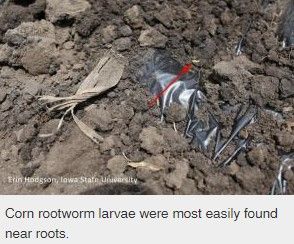
Today, with Ashley Dean and Angie Rieck-Hinz, I met Warren Pierson at FEEL to look for corn rootworm larvae. I predicted peak corn rootworm egg hatch for central Iowa this week based on accumulating degree days. We had no trouble finding larvae in refuge corn, ranging from ¼ to ½ inches in length. They were very active (wiggly) today. I came up with a few guidelines for corn rootworm scouting:
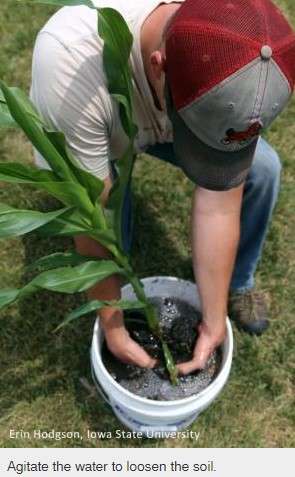
- Dig an 8-inch soil cube around a corn plant. Collect several plants per field, especially if using multiple hybrids per field.
- Two larval scouting options
- Place on a black garbage bag and break apart soil. Larvae should show up on contrasting black background.
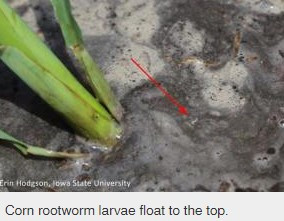
- Place in a 5-gallon bucket with water and break apart soil (sometimes referred to as the "float test"). Larvae should float to top of the water.
- Corn rootworm have three instars, usually people see second and third instars using both methods. Larvae have slender bodies and are cream colored; they have a dark head and dark plate at the end of the abdomen, and have three pairs of thoracic legs.
An economic threshold for larvae has not been established, but the presence serves as an indicator of potential yield losses due to injury while feeding on roots. Red flag is >3 larvae per plant. Continue to monitor for adult emergence (on and after silking) to make management decisions for future growing seasons. Estimate root injury from larvae when adults are present.
Source : iastate.edu