Bluetongue virus, an incurable cattle and sheep-killing disease, is spread by tiny flies once thought to disappear in winter. New research demonstrates that though they are harder to find when it’s cold, they remain active.
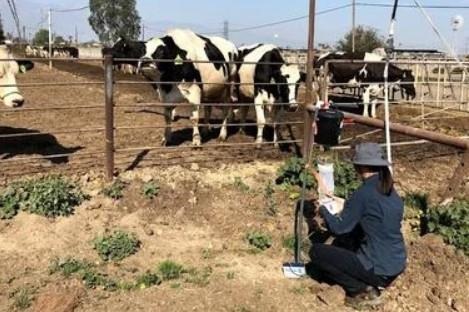
Bluetongue virus is common in cattle throughout most of the United States, particularly in the southwestern U.S. with nearly 20% of some California cattle herds infected. Due to concerns about spread of this virus, exports of U.S. cattle and cattle products to parts of Europe and Asia have been restricted to prevent contamination.
However, not all infected animals die. The main symptoms are elevated temperatures, lethargy, a sore area above the hooves, and some bleeding around the mouth. All ruminants are susceptible, including goats and deer as well as cattle and sheep.
“The tongue, especially in sheep, can turn blue from enlargement with blood,” said Alec Gerry, UC Riverside entomology professor and study co-author.
Biting midges, flies so small they’re also called no-see-ums, are responsible for transmitting the virus. However, the typical adult midge lives for fewer than 30 days.
“There’s been a question about how bluetongue virus persists through the winter months to make it to the next season,” Gerry said. “Our study looked at adult activity in winter, doing collections on only the warmest days each week — something entomologists do not typically do.”
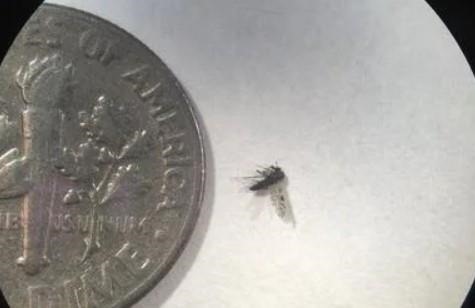
Previous studies found few flies active during winter in California. One theory about the midges posited that they die in colder months, and that the virus-carrying midges are somehow reintroduced from a tropical place with warm winters. Another theory suggested that no-see-um activity is not dormant in winter, but surveillance methods aren’t robust enough to catch their reduced activity and ongoing transmission of bluetongue virus.
Convinced the latter theory was correct, the research team commenced trapping on the warmest days, every two weeks, for three years. “And we caught them every time,” said Xinmi Zhang, a Scripps College entomologist who led the study while a Ph.D. student in Gerry’s lab at UCR.
By changing up typical insect collection practices, the researchers discovered midges continue to be active on the warmest days. This finding is described in a Journal of Medical Entomology paper, and in a new blog post for the Entomological Society of America.
“Not only are the midges more active on those warm days, but the fact that we found younger adults suggests they are developing through the winter months,” Gerry said. “There is no break in the normal life cycle.”
Though this study did not find active virus in winter, another study conducted in California’s Central Valley did find virus during this time period. Taken together, the two studies show virus transmission is likely ongoing.
Given that there is no specific treatment for Bluetongue and no natural enemy of the midges that has been identified to help reduce their numbers, Gerry said the findings should support improved methods for managing virus transmission such as application of insect repellants to ruminant animals during winter when biting midge activity is at its lowest point during the year.
California cattle are acclimated to the strain of the virus circulating locally, so they are don’t suffer bad reactions. However, that could easily change. “If a new strain is imported somewhere that didn’t have it before, the animals’ reactions could be severe. This could result in big economic impacts,” Zhang said. During an outbreak of Bluetongue in northern Europe in 2006, thousands of cows died.
“It’s so important to have a better understanding of these insects’ behavior. And now, we do.”
Source : ucr.edu