By Nicolle Ritchie and Angie Gradiz
Weather
This last week saw a gradual increase in temperature. Pop up storms resulted in precipitation and hail in some parts of Michigan. Smoke from the wildfires in Canada resulted in hazy skies and slightly cooler temperatures. Temperatures are expected to remain consistently at highs around 80 degrees Fahrenheit and lows around 60 F over the next week. Cloudy and hazy conditions will most likely continue, and scattered storms will bring significant precipitation in the middle of next week.
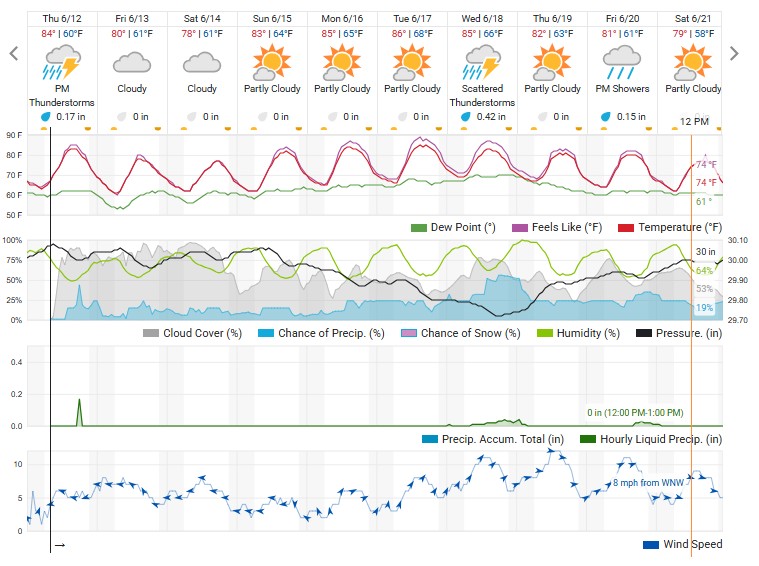
Ten-day Weather Underground forecast as of June 12, 2025.
Crops and pests
Soybean and corn planting is almost wrapped up for the season. Soybeans range from barely emerging to V5. Corn is up to V6 in some places, but it is mostly between V2 and V4. Nutrient uptake is highest during V6 to V10, so sidedress nitrogen will go out soon. Most of the seed corn delayed plantings have been planted by now, and some male rows underwent flaming this week. Tar spot has been found in northern Indiana and Kansas. Even so, best timing for application is still VT to early R1 stages, and higher temperatures coming up will slow down tar spot progress.
Source : msu.edu