By Nicolle Ritchie and Angie Gradiz
It’s important to keep good records of the different challenges and opportunities from each growing season. Records serve as a reference for future seasons and can help you learn from past successes (or struggles), adapt and respond to future challenges. This article provides an overview of findings in southwest Michigan.
Overall, 2026 was a quiet year pest-wise. Other challenges, such as a wet spring, high input costs and extreme temperatures during July, were main stressors. In many cases, you may have had a different experience, pressure or timing than those mentioned below. If so, note that and keep it in your records to help you respond to future crop challenges.
Weather
The 2026 season started out with cold temperatures and several precipitation events that delayed planting. April precipitation was 3-6 inches above normal, according to the High Plains Regional Climate Center. Temperatures warmed up in late May, and corn and soybeans emerged quickly. In June, severe storms with high winds caused damage to trees, houses, irrigation systems and some crops.
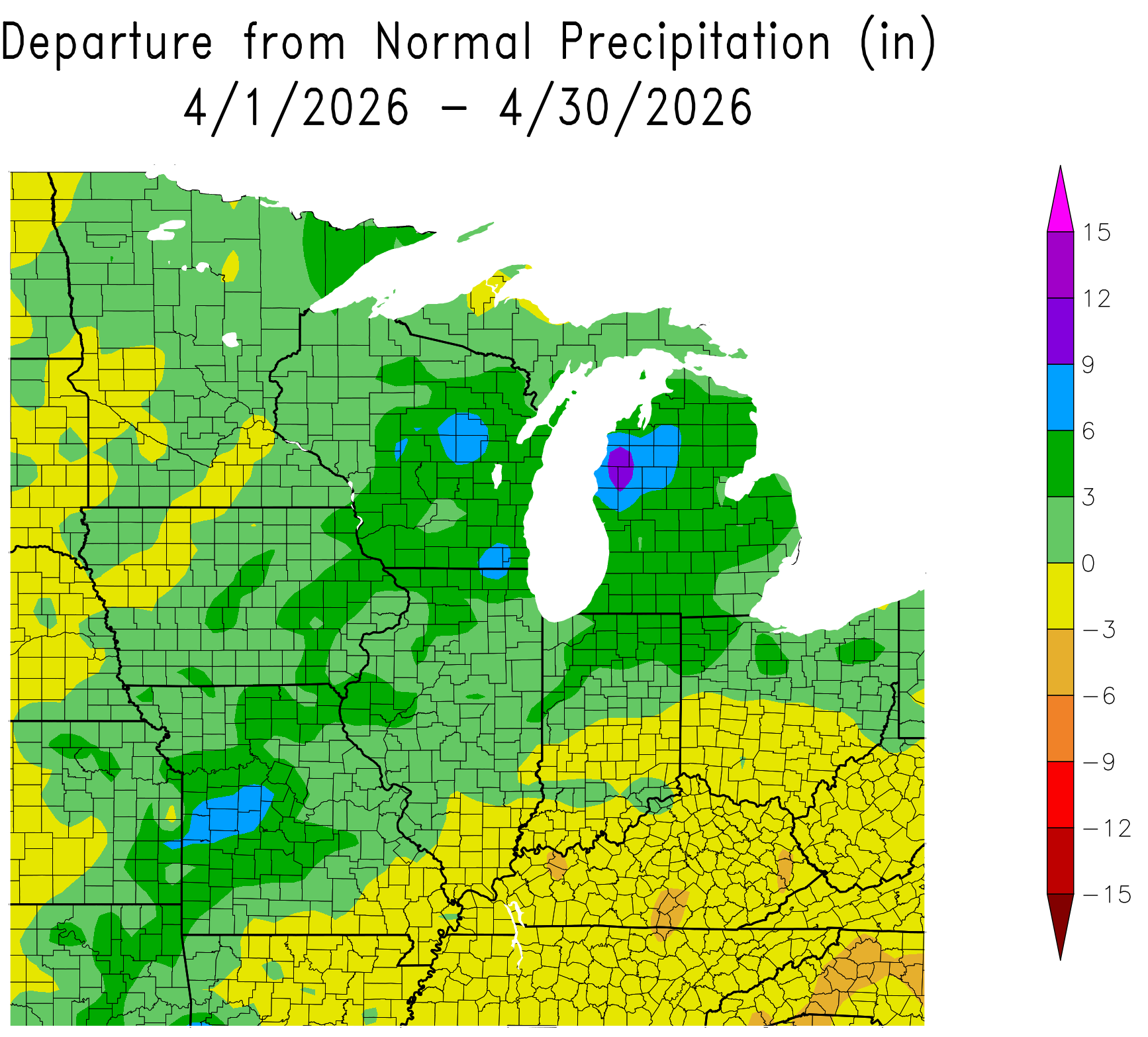
July was mainly hot and dry, with heavy smoke from Canadian wildfires arriving in mid-July. The smoke reduced solar radiation by about 25% in southwest Michigan for a few days. Temperatures ranged considerably in July and August from cool, fall-like temperatures to hot, humid temperatures that drove up the heat index.
Besides significant rainfall in late September, weather leading into and during harvest was quite dry with mild temperatures. In general, harvest began later than usual because crops were slower to dry down this year than in the past couple years. However, harvest progressed quickly once the crops dried down. By the middle of November, it was wrapped up in much of southwest Michigan.
Source : msu.edu